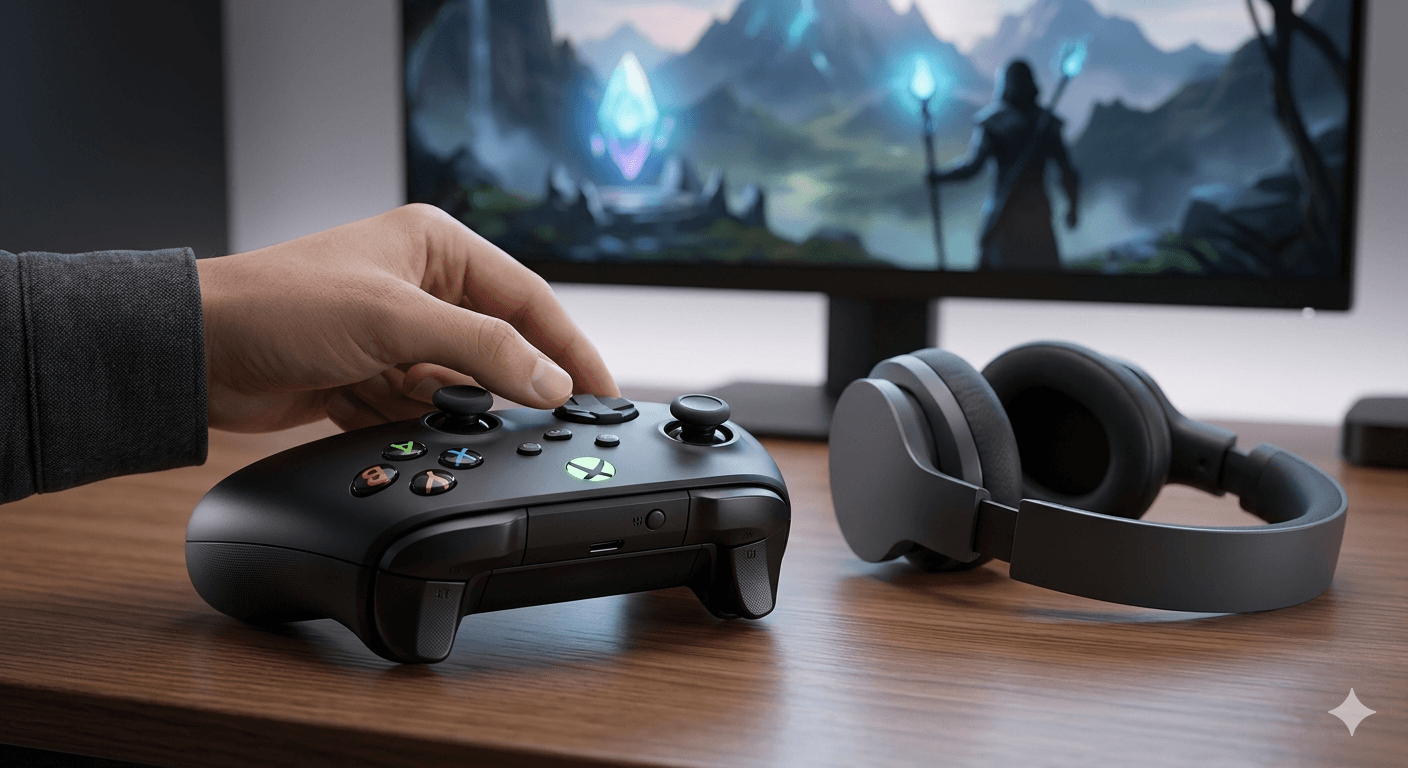

The landscape of interactive entertainment has shifted more in the last three years than in the previous three decades. At the heart of this seismic shift is Microsoft Gaming. What was once a division focused solely on selling a hardware box called “Xbox” has transformed into a multi-platform behemoth that spans consoles, PCs, mobile devices, and the cloud.
Following the historic acquisition of Activision Blizzard and the recent leadership transition to CEO Asha Sharma in early 2026, Microsoft is no longer playing the traditional “Console War” game. Instead, they are rewriting the rules of how games are made, sold, and played. In this deep dive, we explore the current state of Microsoft Gaming and what the future holds for players worldwide.
The Leadership Pivot: The Asha Sharma Era
In February 2026, the gaming world saw a significant changing of the guard. Phil Spencer, the architect of the Game Pass era, transitioned to an advisory role, making way for Asha Sharma to take the helm as CEO of Microsoft Gaming. This move signaled a shift from acquisition to optimization.
Under Sharma’s leadership, the strategy has become “Xbox Everywhere.” We are seeing a more aggressive multiplatform approach. While hardware remains a pillar, the focus has moved toward ensuring that Microsoft’s massive IP library—from Halo to Call of Duty—reaches players whether they are on an Xbox Series X, a PlayStation 5, a Nintendo Switch, or a smartphone.
The Content Engine: 40 Studios and Counting
Microsoft Gaming now oversees three distinct, massive publishing labels: Xbox Game Studios, Bethesda Softworks, and Activision Blizzard. This collective houses over 40 internal development teams. This scale allows Microsoft to dominate almost every genre in the industry:
- Shooters: With Call of Duty, Halo, and Overwatch, Microsoft owns the competitive shooter market.
- RPGs: Through Bethesda and Obsidian, franchises like The Elder Scrolls, Starfield, and Avowed make them the kings of western RPGs.
- Casual & Mobile: Minecraft remains a cultural phenomenon, while King’s Candy Crush provides a steady stream of mobile revenue that rivals the biggest AAA console launches.
The 2025-2026 release calendar has been particularly dense. Titles like Forza Horizon 6 have pushed the boundaries of visual fidelity, while the expansion of Indiana Jones and the Great Circle to rival platforms has proven that Microsoft is willing to trade exclusivity for massive software sales.
Xbox Game Pass: The Ultimate Ecosystem
Game Pass remains the “North Star” of the Microsoft Gaming strategy. Despite recent price adjustments—with Game Pass Ultimate now sitting at ₹1,089/month in India—the value proposition is hard to ignore. It is the only place where players can access massive first-party titles on “Day One” without paying the now-standard $80 (approx. ₹6,700) retail price for standalone games.
“Our goal isn’t to sell a box; it’s to bring the joy of gaming to everyone on the planet.”
— Asha Sharma, CEO of Microsoft Gaming
Next-Gen Hardware: Project Helix
While software is the focus, hardware hasn’t been abandoned. Rumors and leaks regarding Project Helix, the code name for Microsoft’s next-generation hardware, suggest a paradigm shift. Unlike previous consoles, Project Helix is rumored to be a hybrid device—a “PC-Console” that runs a dedicated version of Windows optimized for handheld and living room play.
This would allow players to access their entire Steam and Epic Games libraries alongside their Xbox games, effectively bridging the gap between the two most prominent ecosystems in gaming. It’s a bold move that could render the traditional “generational” concept of consoles obsolete.
The AI Frontier: Meet Muse
Microsoft’s massive investment in AI has found its way into gaming through Muse. Launched in 2025, Muse is an integrated AI toolset for developers and players. For creators, it helps automate tedious tasks like bug testing and environment scaling. For players, it offers a new way to interact with games—imagine an NPC that can have a natural, unscripted conversation with you about the game world in real-time.
Conclusion: A Player-Centric Future
Microsoft Gaming is no longer just a competitor to Sony or Nintendo; it is a platform-agnostic service provider. By prioritizing Game Pass, embracing multiplatform releases, and leaning heavily into AI and cloud infrastructure, Microsoft is positioning itself as the “Netflix of Gaming,” but with the added muscle of being one of the world’s most successful software developers.
Whether you play on a high-end PC, a Series X, or your phone during a commute, you are part of the Microsoft Gaming ecosystem. The “Console Wars” might be over, but the era of the “Global Player” has just begun.
What do you think about Microsoft’s move to bring more games to PlayStation and Nintendo? Is the $80 price tag for new games justified by Game Pass? Let us know in the comments below!





Leave a Reply