
Artificial Intelligence is no longer just a buzzword—it has become part of everyday work life. From writing emails to analyzing data, AI tools are transforming how people work across industries. Whether you are in tech, marketing, HR, or even customer service, AI is quietly reshaping your daily routine.
The way we work today looks very different from just a few years ago. Tasks that once took hours can now be completed in minutes. But with these benefits also come challenges that professionals are still learning to manage.
The Rise of AI in Everyday Work
The adoption of AI tools has increased rapidly in recent years. Companies are integrating AI into their systems to improve efficiency, reduce costs, and stay competitive.
Today, employees use AI for:
- Writing emails and reports
- Automating repetitive tasks
- Data analysis and forecasting
- Customer support through chatbots
AI is no longer limited to tech experts. It is now accessible to almost everyone, making it a powerful everyday assistant.
How AI Is Improving Productivity
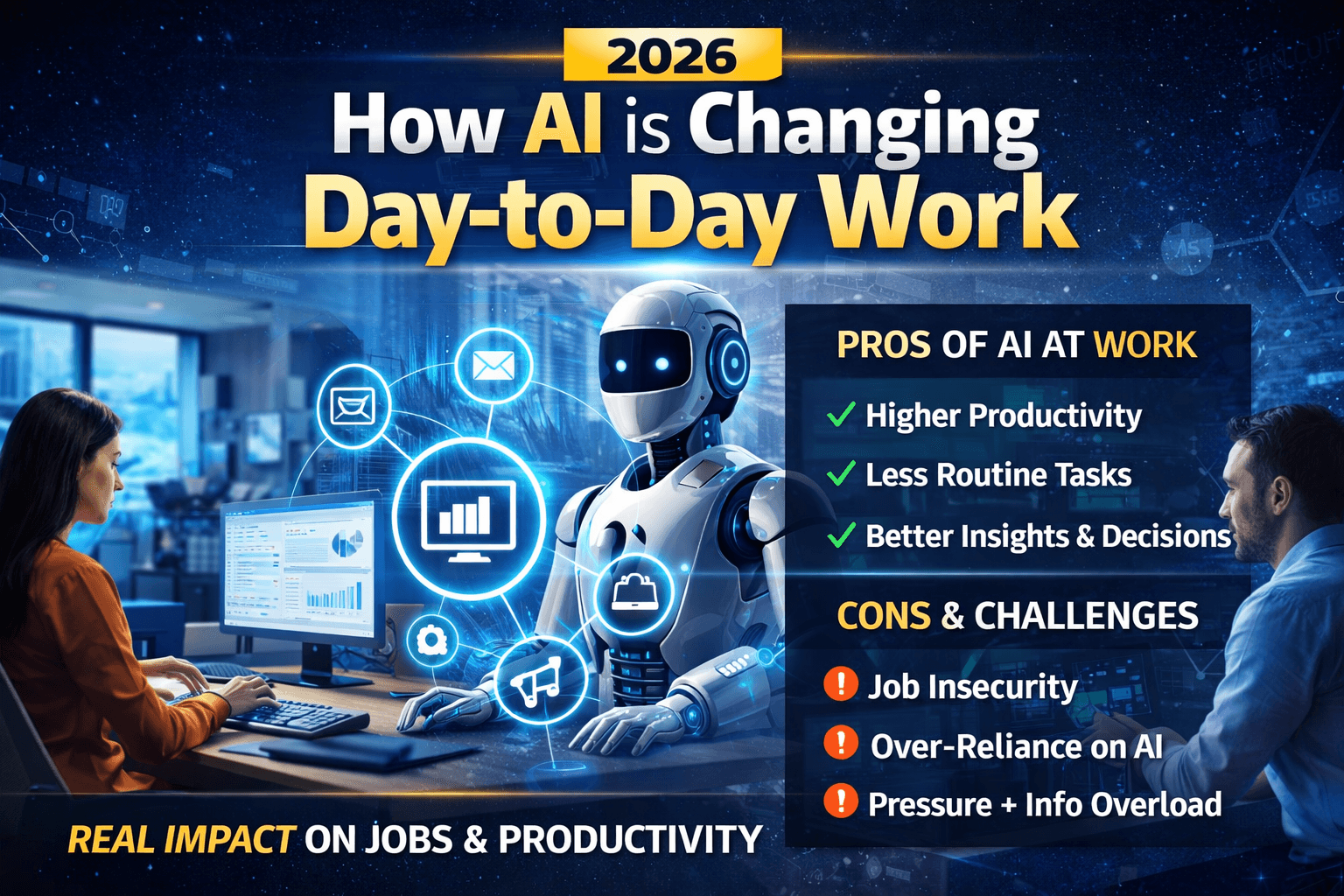
One of the biggest advantages of AI in the workplace is increased productivity.
Faster Task Completion
AI tools can generate content, analyze data, and automate workflows in seconds. This allows employees to focus on more strategic tasks.
Better Decision-Making
AI can process large amounts of data and provide insights that help businesses make smarter decisions.
Automation of Repetitive Work
Routine tasks like data entry, scheduling, and report generation are now handled by AI, reducing workload and saving time.
As a result, employees can spend more time on creative and meaningful work.
The Hidden Challenges of AI at Work
While AI brings many benefits, it also creates new challenges that cannot be ignored.
Job Security Concerns
Many workers worry that AI might replace their jobs. Automation is reducing the need for certain roles, especially repetitive ones.
Over-Reliance on AI
Some employees depend too much on AI tools, which can reduce critical thinking and problem-solving skills.
Productivity Paradox
Interestingly, not everyone feels more productive. Some workers report that constant AI use can:
- Increase pressure
- Create confusion
- Lead to information overload
So, while AI improves efficiency, it also changes how people experience work.
How Companies Are Adapting
Organizations are quickly adapting to the rise of AI in the workplace.
Training Employees
Companies are investing in AI training programs to help employees use these tools effectively.
Redefining Job Roles
Instead of replacing workers, many companies are redesigning roles to include AI collaboration.
Focus on Hybrid Skills
The demand is shifting toward skills like:
- Critical thinking
- Creativity
- Emotional intelligence
These are areas where humans still outperform AI.
Real-Life Impact Across Industries
AI is not limited to one sector. Its impact can be seen across multiple industries.
Tech Industry
Developers use AI to write and debug code faster.
Marketing
AI helps create content, analyze trends, and optimize campaigns.
Customer Service
Chatbots handle basic queries, allowing human agents to focus on complex issues.
Healthcare
AI assists in diagnosis and data analysis, improving patient care.
This wide adoption shows how deeply AI is embedded in daily work life.
🔮 The Future of Work with AI
The future of work will not be about humans vs AI—it will be about humans working with AI.
Collaboration Over Replacement
AI will act as a partner rather than a replacement, helping employees perform better.
Continuous Learning
Professionals will need to keep learning new tools and skills to stay relevant.
Flexible Work Environment
AI will enable more remote and flexible work setups, improving work-life balance.
The key is to adapt and evolve with the technology.
Final Thoughts
AI is transforming day-to-day work in ways we never imagined. It is making tasks faster, improving decision-making, and opening new opportunities. At the same time, it is challenging traditional work patterns and raising important questions about the future of jobs.
The truth is simple: AI is here to stay. Instead of fearing it, professionals need to learn how to use it effectively.
For more updated Trendtoday360.com




Leave a Reply