
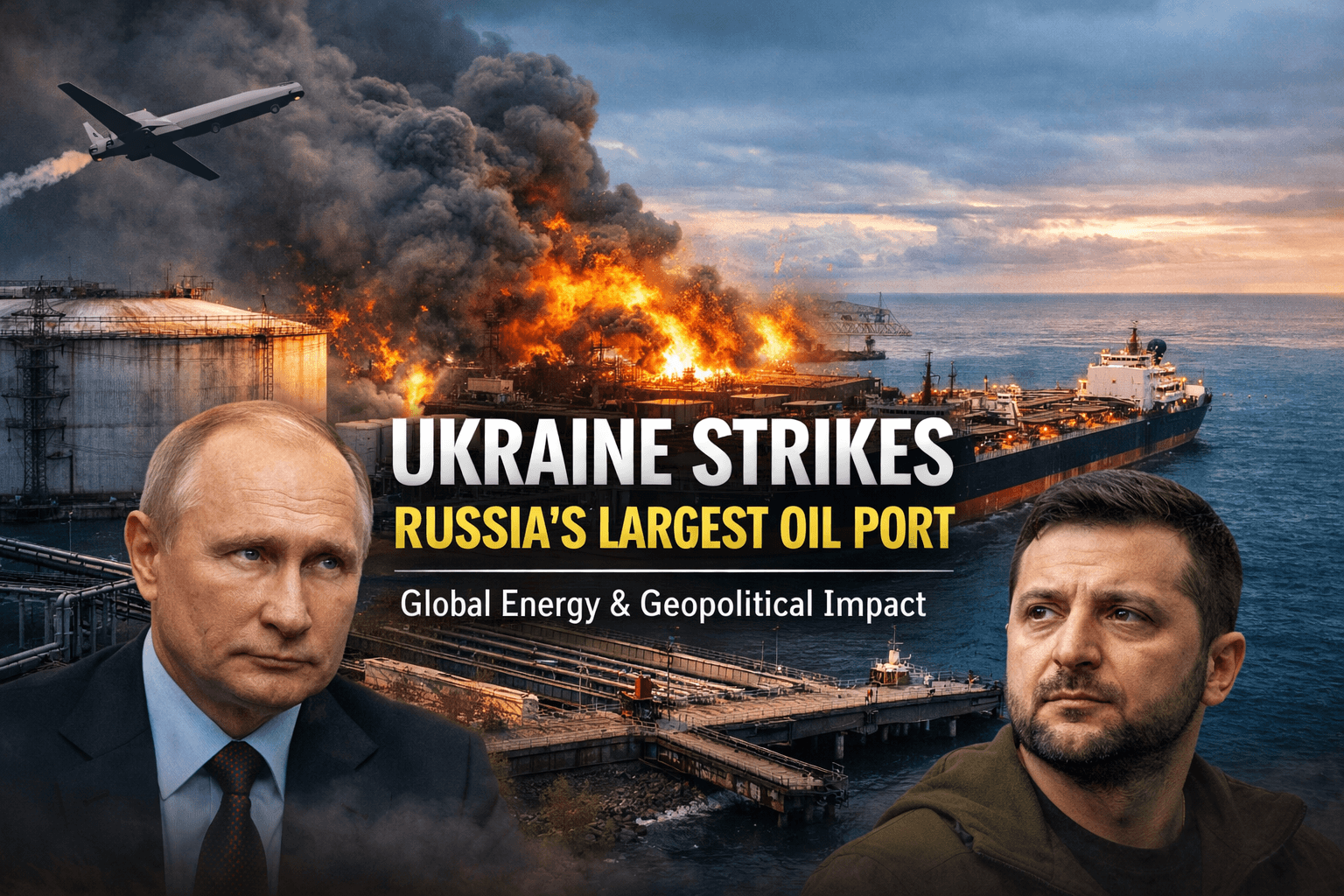

Ukraine’s Strike on Russia In a dramatic escalation of the ongoing conflict, Ukraine reportedly carried out a strategic strike on one of Russia’s most critical energy hubs—its largest oil export port near Primorsk. The move comes at a time when global attention has largely been focused on rising tensions between Iran and the United States, adding a new layer of complexity to an already volatile geopolitical landscape.
This development isn’t just another headline—it could have far-reaching consequences for global oil markets, regional stability, and the trajectory of the war itself.
A Strategic Strike with Global Implications
The reported attack targeted infrastructure that plays a vital role in Russia’s oil exports via the Baltic Sea. This port is responsible for handling massive volumes of crude oil daily, making it a cornerstone of Russia’s energy economy.
By striking such a key facility, Ukraine appears to be aiming at more than just immediate disruption. The objective is likely twofold:
Economic pressure:
Limiting Russia’s ability to export oil directly impacts its revenue streams.
Strategic signaling:
Demonstrating the capability to hit deep, high-value targets.
This move reflects a shift in Ukraine’s military strategy—from defensive operations to more calculated, high-impact strikes.
The Leaders at the Center
The escalation inevitably brings focus to the two central figures in the conflict: Vladimir Putin and Volodymyr Zelenskyy.
- Putin faces increasing pressure to protect critical infrastructure while maintaining Russia’s economic stability.
- Zelenskyy, on the other hand, continues to push for actions that weaken Russia’s war capabilities and global standing.
This strike underscores Ukraine’s determination to shift the balance—not just on the battlefield, but in the economic domain as well.
Why This Timing Matters
The timing of the strike is particularly significant. With global oil prices already influenced by tensions in the Middle East—especially around Iran—any disruption to Russian oil exports could amplify market volatility.
Key factors at play:
- Tightening energy supply: Ongoing geopolitical conflicts are already constraining supply chains.
- Market sensitivity: Oil markets react quickly to disruptions, especially in major exporting nations.
- Strategic leverage: Ukraine may be leveraging global conditions to maximize the impact of its actions.
Impact on Global Oil Markets
Russia is one of the world’s largest oil exporters. Any disruption at a major port like Primorsk can ripple across global markets.
संभावित प्रभाव (Potential Impacts):
- Rising oil prices: Reduced exports could tighten supply.
- Energy insecurity: Countries dependent on Russian oil may seek alternative sources.
- Market volatility: Traders react sharply to geopolitical risks.
If the disruption is prolonged, the consequences could extend beyond Europe, affecting energy costs worldwide.
A Shift Toward Economic Warfare
This attack highlights an evolving dimension of modern warfare: targeting economic infrastructure.
Rather than focusing solely on military assets, Ukraine is increasingly:
- Targeting logistics and supply chains
- Disrupting revenue-generating assets
- Leveraging precision strikes for maximum impact
This strategy aims to weaken Russia’s ability to sustain prolonged conflict.
What Happens Next?
The big question now is how Russia will respond.
संभावित परिदृश्य (Possible scenarios):
- Retaliatory strikes on Ukrainian infrastructure
- Increased defense of critical energy facilities
- Further escalation in both military and cyber domains
At the same time, global powers will be closely watching, as any escalation could further destabilize international markets and alliances.
Final Thoughts
Ukraine’s reported strike on Russia’s largest oil port marks a pivotal moment in the conflict. It signals a shift toward high-impact, economically targeted operations that could reshape both the war and global energy dynamics.
As tensions continue to rise—not just in Eastern Europe but also in the Middle East—the world may be entering a phase where conflicts are increasingly interconnected. The consequences of such actions will not remain regional—they will be felt across economies, markets, and political systems worldwide.
For more updates Trendtoday360.com




Leave a Reply