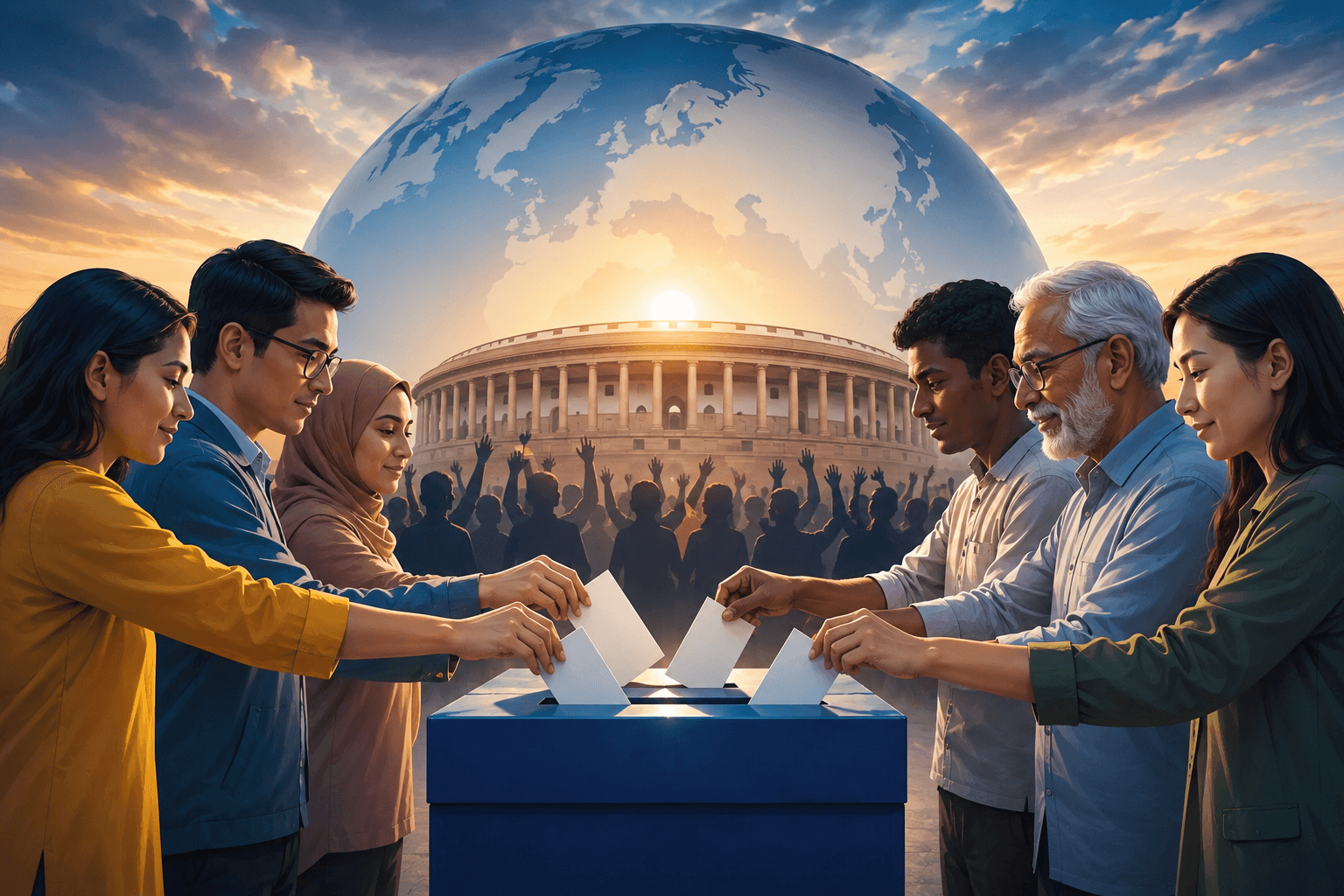

Democracy is one of the most influential political systems in the modern world. It is based on the principle that power belongs to the people. Citizens have the right to choose their leaders, express their opinions, and participate in decision-making processes that shape society. The word “democracy” comes from the Greek words demos meaning “people” and kratos meaning “power” or “rule.” Therefore, democracy literally means “rule by the people.”
In today’s world, democracy is considered essential for ensuring freedom, equality, justice, and human rights. Countries that practice democracy often encourage citizen participation, transparency, and accountability in governance. Although democracy is not perfect, it remains one of the most effective systems for protecting the rights and dignity of individuals.
History of Democracy
The concept of democracy originated in ancient Greece, particularly in Athens around the 5th century BCE. In Athens, citizens directly participated in political decisions. However, only free men could vote, while women, slaves, and foreigners were excluded. Despite its limitations, the Athenian model laid the foundation for modern democratic systems.
Over centuries, democratic ideas evolved and spread across the world. Major historical events such as the Magna Carta in England (1215), the American Revolution (1776), and the French Revolution (1789) contributed to the development of democratic values. These events emphasized liberty, equality, and the rights of citizens against absolute rulers.
In the modern era, democracy expanded significantly after World War II. Many countries gained independence and adopted democratic constitutions. Today, democracy exists in different forms across various nations, each adapting the system according to its culture and political structure.
Features of Democracy
Democracy is characterized by several important features that distinguish it from other forms of government:
- Free and Fair Elections: Citizens have the right to vote and choose their representatives through regular elections.
- Rule of Law: Every person, including leaders and government officials, is subject to the law.
- Freedom of Speech: People can express their opinions without fear of punishment.
- Equality: All citizens are treated equally regardless of religion, race, gender, or social status.
- Protection of Human Rights: Democratic governments safeguard the rights and freedoms of individuals.
- Accountability: Leaders are answerable to the people and can be removed through elections.
Types of Democracy
Democracy can be broadly divided into two main types:
1. Direct Democracy
In a direct democracy, citizens directly participate in making laws and policies. This system was practiced in ancient Athens. Today, direct democracy is rare because it is difficult to implement in large countries with huge populations. However, some countries use referendums and public voting for important issues.
2. Representative Democracy
Representative democracy is the most common form in the modern world. Citizens elect representatives who make decisions on their behalf. Countries such as India, the United States, and the United Kingdom follow this model. This system allows governments to function efficiently while still representing the will of the people.
Importance of Democracy
Democracy plays a vital role in maintaining peace, stability, and development in society. It empowers citizens and ensures that governments work for the welfare of the people. Some key reasons why democracy is important include:
1. Protection of Freedom
Democracy guarantees basic freedoms such as freedom of speech, religion, and expression. Citizens can criticize the government, participate in protests, and voice their concerns without fear.
2. Equality and Justice
In a democratic society, every individual is equal before the law. Democracy discourages discrimination and promotes social justice by giving equal opportunities to all citizens.
3. Public Participation
Democracy encourages people to actively participate in political and social affairs. Voting, debates, and public discussions strengthen civic responsibility and national unity.
4. Accountability of Government
Democratic governments are accountable to the public. Leaders who fail to perform their duties can be replaced through elections. This reduces the chances of dictatorship and abuse of power.
5. Peaceful Transfer of Power
Democracy allows a peaceful transition of power after elections. Instead of violence or conflict, leadership changes occur through constitutional processes.
Challenges Faced by Democracy
Despite its advantages, democracy faces several challenges in the modern world. These challenges can weaken democratic institutions and reduce public trust.
1. Corruption
Corruption is a major threat to democracy. When politicians misuse public funds or engage in unethical practices, citizens lose faith in the government.
2. Misinformation
The spread of fake news and misinformation through social media can influence public opinion and elections. This makes it difficult for people to make informed decisions.
3. Political Polarization
Increasing divisions between political groups can create conflict and reduce cooperation. Polarization weakens democratic dialogue and national unity.
4. Low Voter Participation
In some countries, many citizens do not vote due to lack of interest or trust in politics. Low participation weakens the democratic process.
5. Abuse of Power
Sometimes leaders attempt to control institutions, media, or the judiciary for personal gain. Such actions can damage democracy and lead to authoritarianism.
Democracy in India
India is the world’s largest democracy. After gaining independence in 1947, India adopted a democratic constitution in 1950. The Constitution of India guarantees fundamental rights, universal adult franchise, and equality before the law.
Indian democracy is based on a parliamentary system where citizens elect representatives at local, state, and national levels. Elections are conducted regularly by the Election Commission of India, ensuring fair participation of citizens.
India’s democracy is unique because of its diversity in language, religion, culture, and traditions. Despite challenges such as corruption, poverty, and social inequality, India continues to strengthen its democratic institutions.
The Future of Democracy
The future of democracy depends on active citizen participation, strong institutions, and respect for constitutional values. Technology and digital communication have created new opportunities for public engagement, but they have also introduced challenges like cyber manipulation and fake news.
To protect democracy, citizens must remain informed, responsible, and active in civic life. Governments should promote education, transparency, and equal opportunities. Media organizations also play an important role in providing accurate information and encouraging public debate.
Young people are especially important for the future of democracy. By participating in elections, community activities, and social movements, youth can contribute to positive change and strengthen democratic values.
Conclusion
Democracy is more than just a system of government; it is a way of life that values freedom, equality, participation, and justice. It gives citizens the power to shape their nation and hold leaders accountable. Although democracy faces many challenges, its principles remain essential for building peaceful and progressive societies.
A strong democracy requires responsible citizens, transparent institutions, and ethical leadership. By respecting democratic values and participating actively in society, people can help create a fair and inclusive future for generations to come.





Leave a Reply