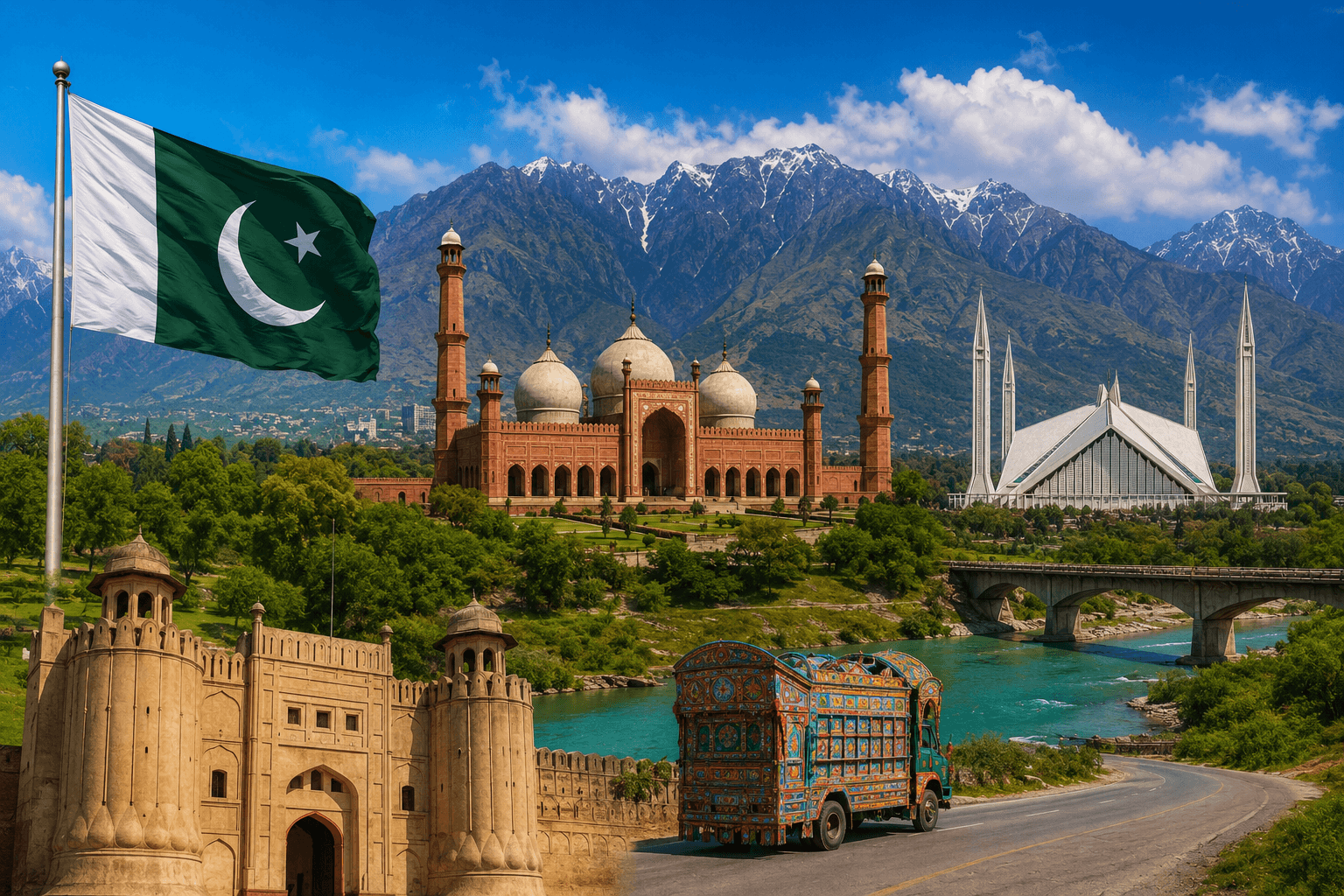

Pakistan is one of the most significant countries in South Asia, known for its rich history, cultural diversity, strategic importance, and rapidly growing population. Officially called the Islamic Republic of Pakistan, the country was created in 1947 after the partition of British India. Since its independence, Pakistan has played a major role in regional politics, international relations, trade, and cultural development.
Pakistan is home to breathtaking mountains, historical landmarks, ancient civilizations, and vibrant traditions. Despite facing political and economic challenges over the decades, the country continues to evolve as an important regional power with immense potential in tourism, technology, agriculture, and industry.
History of Pakistan
The history of Pakistan dates back thousands of years. The region was home to the Indus Valley Civilization, one of the world’s oldest urban civilizations, which flourished around 2500 BCE. Cities such as Mohenjo-Daro and Harappa demonstrated advanced urban planning, trade systems, and cultural sophistication.
Over centuries, the area witnessed the influence of various empires and rulers, including Persians, Greeks, Mughals, and the British Empire. The arrival of Islam in the Indian subcontinent during the 8th century greatly influenced the culture and identity of the region.
Pakistan officially emerged as an independent nation on August 14, 1947, under the leadership of Muhammad Ali Jinnah, who is widely known as the founder of Pakistan. The creation of Pakistan was based on the idea of providing a separate homeland for Muslims in the Indian subcontinent.
Geography and Natural Beauty
Pakistan is geographically diverse and features mountains, deserts, rivers, plains, and coastal areas. The country shares borders with India, China, Afghanistan, and Iran, making it strategically important in South Asia.
Northern Pakistan is famous for its stunning mountain ranges, including the Himalayas, Karakoram, and Hindu Kush. K2, the world’s second-highest mountain, is located in Pakistan and attracts climbers from around the globe.
The country also has beautiful valleys such as Hunza, Swat, and Skardu, which are popular tourist destinations. Rivers including the Indus River play a critical role in agriculture and daily life.
Culture and Traditions
Pakistan’s culture is a blend of regional traditions, Islamic heritage, and historical influences. The country is ethnically diverse, with Punjabis, Sindhis, Pashtuns, Baloch, and many other communities contributing to its cultural richness.
Urdu is the national language, while English is widely used in government, business, and education. In addition, regional languages such as Punjabi, Sindhi, Pashto, and Balochi are spoken across different provinces.
Traditional clothing such as the shalwar kameez is commonly worn throughout the country. Pakistani music, poetry, and art also have deep cultural significance. Famous poets like Allama Iqbal are celebrated for their contributions to literature and philosophy.
Festivals such as Eid-ul-Fitr and Eid-ul-Adha are major religious celebrations in Pakistan. Independence Day on August 14 is another important national event marked by patriotic ceremonies and cultural activities.
Economy of Pakistan
Pakistan has a mixed economy that includes agriculture, manufacturing, services, and trade. Agriculture remains one of the country’s largest sectors, employing millions of people. Major crops include wheat, rice, cotton, and sugarcane.
The textile industry is a major contributor to Pakistan’s exports and economy. Pakistani textiles and garments are sold worldwide and play a significant role in international trade.
In recent years, Pakistan has also seen growth in information technology, freelancing, and digital entrepreneurship. Young professionals and startups are increasingly contributing to the country’s technology sector.
However, Pakistan faces economic challenges such as inflation, unemployment, debt, and currency instability. Governments have introduced various reforms to improve economic growth, attract foreign investment, and strengthen infrastructure.
Political System and Governance
Pakistan operates as a federal parliamentary republic. The country has a President as the head of state and a Prime Minister as the head of government. Parliament plays a central role in lawmaking and governance.
Since independence, Pakistan’s political history has included periods of democratic government as well as military rule. Political instability, corruption allegations, and tensions between institutions have often influenced the country’s development.
Despite these challenges, democratic processes continue to evolve, with elections playing an important role in shaping leadership and public policy.
Education and Youth Population
Pakistan has one of the world’s largest youth populations, which presents both opportunities and challenges. Education is considered essential for the country’s future growth and development.
Universities in cities such as Lahore, Karachi, and Islamabad are producing graduates in engineering, medicine, business, and technology. Online learning and digital education platforms are also expanding opportunities for students.
However, the education system still faces issues such as unequal access, lack of resources, and literacy challenges in rural areas. Improving education remains a major priority for policymakers and social organizations.
Tourism Potential
Pakistan has enormous tourism potential because of its natural beauty, historical sites, and cultural heritage. The northern regions are especially popular among adventure travelers and nature enthusiasts.
Historical landmarks such as the Badshahi Mosque, Lahore Fort, Mohenjo-Daro, and Taxila attract visitors interested in history and architecture. Religious tourism is also significant due to important Islamic and Sikh heritage sites.
In recent years, the government has taken steps to promote tourism by improving infrastructure, easing visa policies, and highlighting Pakistan’s scenic destinations on international platforms.
International Relations
Pakistan maintains diplomatic relations with countries around the world and plays an important role in regional and global affairs. The country has strategic partnerships with China, strong ties with Muslim-majority nations, and complex relations with neighboring India and Afghanistan.
Pakistan is also a member of international organizations such as the United Nations, the Organization of Islamic Cooperation (OIC), and the Shanghai Cooperation Organization (SCO).
Security issues, border tensions, and regional conflicts have often influenced Pakistan’s foreign policy. At the same time, trade partnerships and economic cooperation remain important priorities.
Challenges Facing Pakistan
Like many developing countries, Pakistan faces several major challenges. Economic instability, political polarization, unemployment, and inflation affect millions of citizens.
Climate change has also become a serious concern. Floods, water shortages, and rising temperatures create environmental and humanitarian challenges. Pakistan has experienced devastating floods in recent years, highlighting the need for stronger climate resilience and disaster management systems.
Other issues include healthcare access, infrastructure development, and energy shortages. Addressing these problems requires long-term planning, investment, and political stability.
The Future of Pakistan
Pakistan’s future depends on how effectively it manages economic reforms, education, technological innovation, and governance challenges. With a large young population and growing digital economy, the country has significant potential for development.
Investments in renewable energy, infrastructure, tourism, and information technology could create new opportunities for growth. International cooperation and regional stability will also play important roles in shaping Pakistan’s future.
Many experts believe that Pakistan’s greatest strength lies in its people — particularly its youth, entrepreneurs, and skilled workforce. By improving education, transparency, and economic opportunities, Pakistan can continue moving toward greater stability and progress.
Conclusion
Pakistan is a nation with a rich history, diverse culture, and significant global importance. From the ancient Indus Valley Civilization to modern technological development, the country has experienced both remarkable achievements and complex challenges.
While economic and political issues remain important concerns, Pakistan’s natural beauty, cultural heritage, and youthful population provide strong foundations for future growth. As the country continues to evolve, its role in South Asia and the wider world is likely to remain highly influential.





Leave a Reply