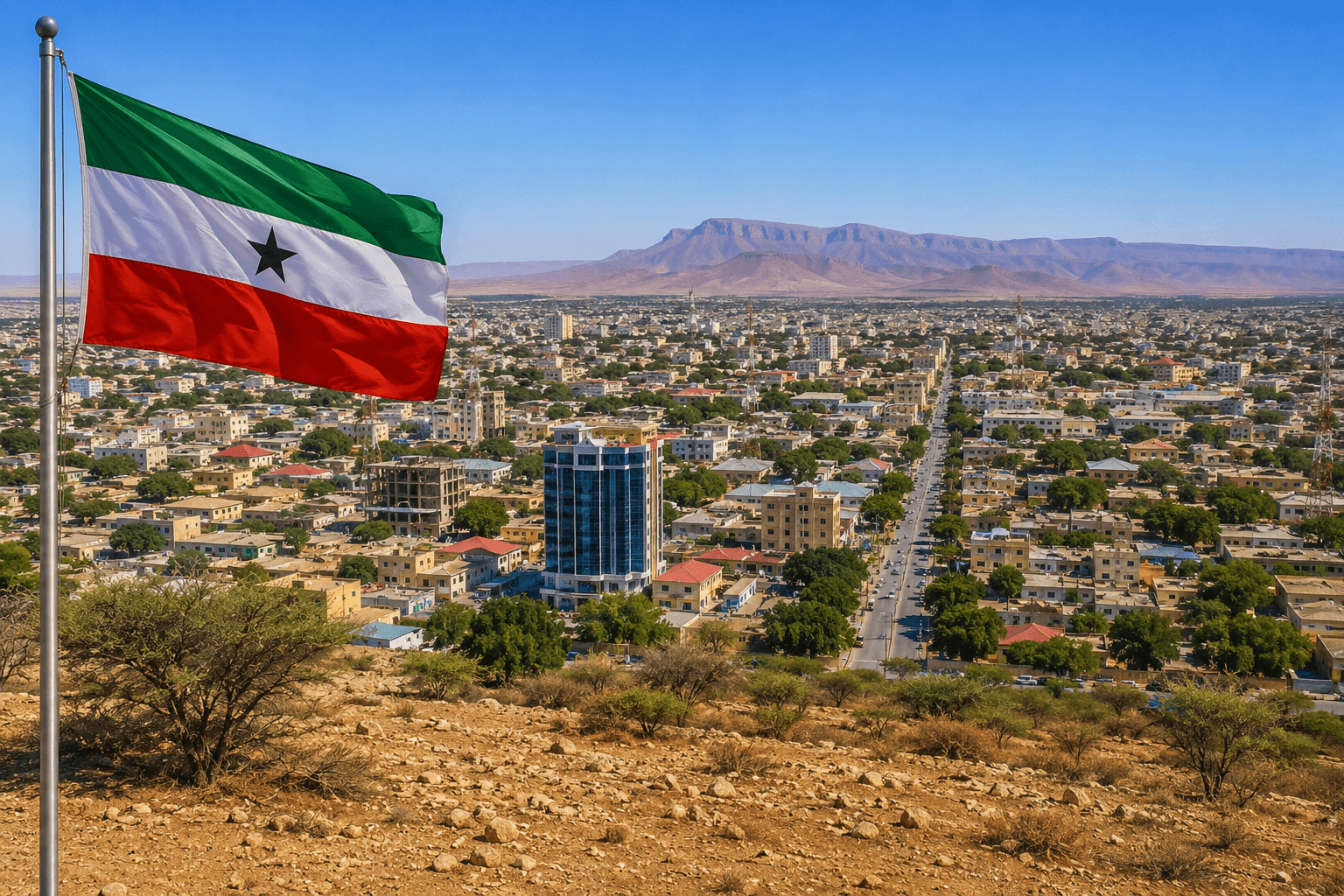

Somaliland is one of the most unique and politically complex regions in Africa. Located in the Horn of Africa along the Gulf of Aden, Somaliland has operated as a self-governing territory for more than three decades despite lacking widespread international recognition as an independent country.
Although internationally considered part of Somalia, Somaliland maintains its own government, military, currency, passport system, and democratic institutions. Over the years, the region has built a reputation for political stability, security, and economic resilience compared to many neighboring areas affected by conflict and instability.
Somaliland’s quest for international recognition remains one of the most important political issues facing the region today. Supporters argue that Somaliland meets many of the requirements of statehood, while international organizations and governments continue balancing regional diplomacy and geopolitical concerns.
This article explores Somaliland’s history, political structure, economy, culture, international relations, and future prospects in the modern world.
The Historical Background of Somaliland
The history of Somaliland dates back centuries, with the region serving as an important center for trade and cultural exchange in the Horn of Africa. Ancient trade routes connected Somaliland’s coastal ports with the Middle East, Asia, and other African regions.
During the colonial era, Somaliland became a British protectorate known as British Somaliland. Meanwhile, southern Somalia was controlled by Italy as Italian Somaliland.
In 1960, British Somaliland gained independence and briefly existed as an independent state before voluntarily uniting with Italian Somaliland to form the Somali Republic.
However, political tensions and dissatisfaction with the central Somali government grew over time, particularly during the military rule of President Siad Barre. Civil conflict and government repression eventually contributed to the collapse of Somalia’s central government in the early 1990s.
In 1991, Somaliland declared independence from Somalia following the fall of the Barre regime. Since then, it has operated as a self-governing administration with its own political institutions.
Geography and Strategic Importance
Somaliland is located along the southern coast of the Gulf of Aden, bordering Djibouti, Ethiopia, and Somalia. Its strategic position near important global shipping routes gives the region significant geopolitical importance.
The port city of Berbera is one of Somaliland’s most valuable economic and strategic assets. Berbera’s location along international maritime routes has attracted growing interest from regional and global investors.
The region’s geography includes coastal plains, mountain ranges, and semi-arid landscapes. Livestock farming remains an important part of rural economic life, while urban centers continue expanding through trade and infrastructure development.
Political System and Governance
One of Somaliland’s most notable achievements has been the development of relatively stable political institutions despite limited international recognition.
Somaliland operates with its own constitution, elected government, judiciary, security forces, and parliament. The region has held multiple elections, including presidential, parliamentary, and local elections.
Political analysts often point to Somaliland as an example of locally driven state-building in Africa. Clan elders, traditional leadership structures, and modern democratic institutions all play roles in the region’s political system.
Compared to many conflict-affected regions in the Horn of Africa, Somaliland has maintained a relatively stable security environment for several years.
However, political disputes, election delays, and economic challenges continue to test the region’s democratic institutions.
The Pursuit of International Recognition
The question of international recognition remains Somaliland’s most important diplomatic challenge. Although Somaliland functions independently in practice, no major country officially recognizes it as a sovereign state.
Somaliland leaders argue that the region has fulfilled the requirements for statehood, including defined territory, permanent population, functioning government, and the ability to engage in international relations.
Supporters of recognition also emphasize Somaliland’s relative political stability, democratic progress, and security cooperation.
However, many international organizations and governments remain cautious due to concerns about regional stability and the implications for Somalia’s territorial integrity.
The African Union and United Nations continue supporting Somalia’s internationally recognized borders, which include Somaliland as part of Somalia.
Despite the lack of official recognition, Somaliland maintains informal diplomatic relationships and cooperation agreements with several countries and international organizations.
Somaliland’s Economy
Somaliland’s economy is primarily based on livestock exports, trade, remittances, telecommunications, and port activities.
Livestock exports to Gulf countries remain one of the region’s most important economic sectors. Camels, goats, and sheep are regularly exported through Berbera Port to markets in the Middle East.
Remittances from Somaliland’s diaspora community also play a major role in supporting local households and businesses. Many Somaliland citizens living abroad send money back to family members and invest in local development projects.
Telecommunications and mobile banking services have expanded rapidly in recent years. Somaliland is often recognized for its advanced mobile money systems and growing digital connectivity.
However, the economy still faces major challenges, including unemployment, limited industrialization, drought conditions, and lack of international financial recognition.
The Importance of Berbera Port
Berbera Port has become one of Somaliland’s most strategically important economic assets. Located along the Gulf of Aden, the port serves as a key trade gateway for the region.
International investment in Berbera’s infrastructure has increased significantly in recent years. Port modernization projects aim to strengthen trade links between Somaliland, Ethiopia, and global shipping markets.
Ethiopia, one of Africa’s largest landlocked countries, views Berbera as an important alternative trade route for imports and exports.
The development of transportation corridors connecting Berbera to Ethiopia could potentially increase regional trade and economic growth.
Security and Regional Stability
Security has been one of Somaliland’s strongest advantages compared to other parts of Somalia and some neighboring regions.
Local security forces and community-based conflict resolution systems have helped maintain relative stability within Somaliland’s borders.
This stability has allowed businesses, educational institutions, and infrastructure projects to operate more effectively than in many conflict-affected areas nearby.
However, Somaliland still faces security challenges involving regional disputes, border tensions, extremist threats, and political disagreements.
The Horn of Africa remains a strategically sensitive region due to global shipping routes, military interests, migration issues, and geopolitical competition among regional and international powers.
Education and Cultural Identity
Somaliland has invested in education and cultural preservation despite economic limitations. Universities, schools, and vocational training centers have expanded in major cities such as Hargeisa.
The region’s cultural identity is strongly connected to Somali language, poetry, oral traditions, and Islamic heritage.
Somaliland’s diaspora communities have also contributed significantly to educational and cultural development projects.
Younger generations increasingly engage with technology, entrepreneurship, and international education opportunities while maintaining strong local traditions.
Challenges Facing Somaliland
Despite political stability compared to some neighboring regions, Somaliland continues facing major economic and diplomatic challenges.
Lack of international recognition limits access to global financial institutions, development funding, and international diplomatic representation.
Climate change and recurring droughts also affect agriculture, livestock production, and water resources across the region.
Youth unemployment remains a serious issue, particularly as urban populations continue growing.
Political disagreements regarding elections, constitutional reforms, and regional representation occasionally create domestic tensions.
Addressing these challenges will be critical for Somaliland’s long-term stability and development.
Future Prospects
Somaliland’s future will likely depend on a combination of political reforms, economic development, regional diplomacy, and international engagement.
The region’s supporters remain optimistic that continued democratic progress and economic growth could eventually strengthen its case for international recognition.
Infrastructure projects involving Berbera Port, transportation networks, and digital technology may create new economic opportunities in the coming years.
At the same time, regional security dynamics and international diplomatic priorities will continue influencing Somaliland’s political future.
The region’s ability to maintain stability while improving economic conditions could shape how global leaders view Somaliland’s role in the Horn of Africa.
Conclusion
Somaliland remains one of the most politically unique territories in the world. Despite lacking formal international recognition, it has developed functioning institutions, relative political stability, and growing economic infrastructure over the past three decades.
From its historical roots and democratic governance to its strategic location and economic ambitions, Somaliland continues attracting international attention as a significant player in the Horn of Africa.
While major diplomatic and economic challenges remain, Somaliland’s ongoing efforts toward development, stability, and self-governance will likely continue shaping regional politics and international discussions for years to come.





Leave a Reply