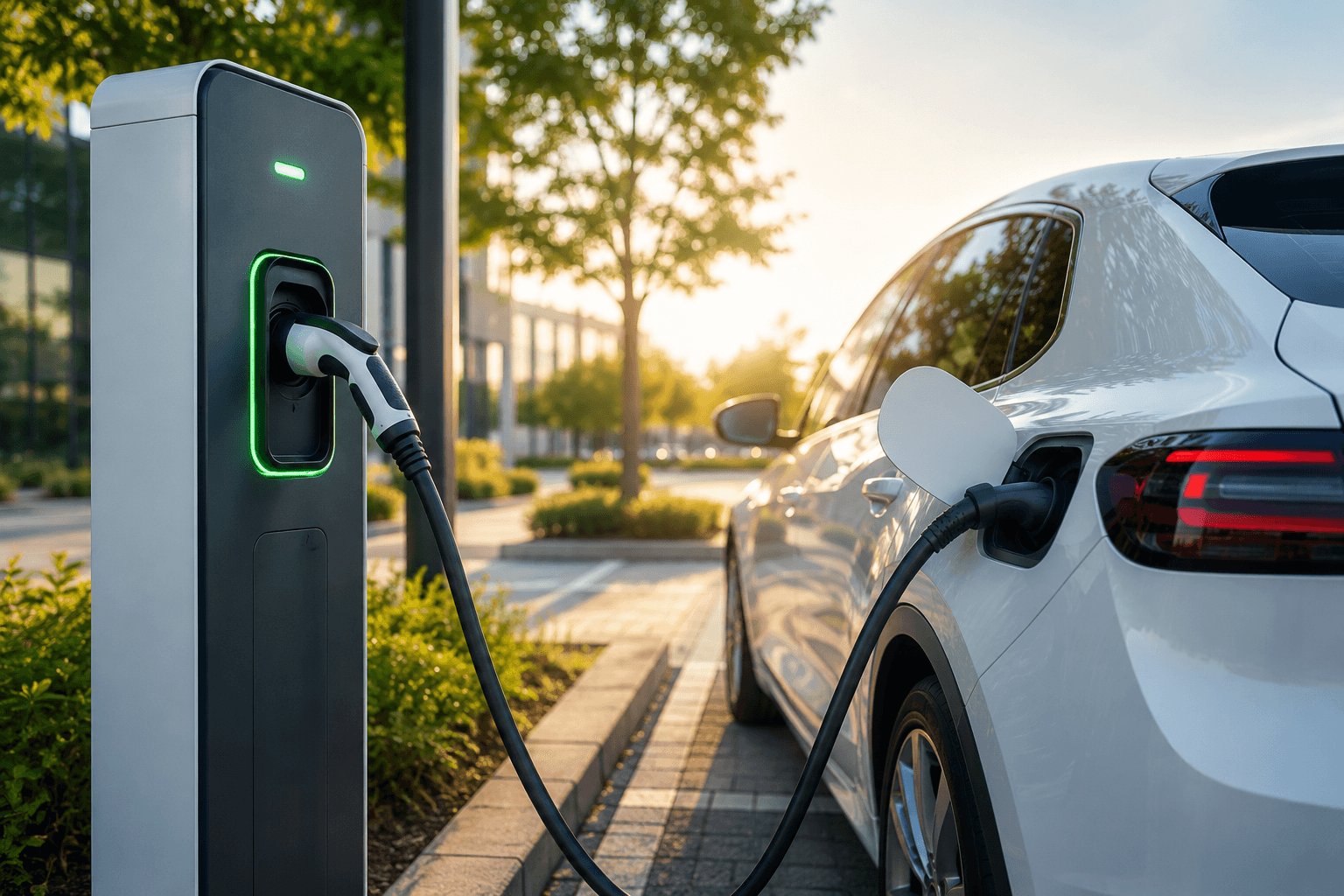

Electric Vehicle (EV) charging is a critical component of the global shift toward sustainable transportation. As the world moves away from fossil fuels, EV charging infrastructure is becoming essential for supporting electric cars, buses, and two-wheelers.
EV charging systems allow electric vehicles to recharge their batteries using electricity from the power grid or renewable energy sources. This technology is rapidly expanding across cities, highways, and residential areas worldwide.
This article explores how EV charging works, different types of charging systems, benefits, challenges, and the future of electric mobility.
What Is EV Charging?
EV charging refers to the process of supplying electrical energy to recharge the battery of an electric vehicle. Unlike traditional vehicles that use gasoline or diesel, EVs rely entirely on stored electrical energy.
Charging can take place at home, in public charging stations, workplaces, or dedicated fast-charging hubs.
The speed and efficiency of charging depend on the type of charger, battery capacity, and power supply.
How EV Charging Works
EV charging works by transferring electricity from a power source into the vehicle’s battery through a charging connector and onboard charging system.
The process involves:
- Connecting the vehicle to a charging station
- Electric current flowing into the onboard charger
- Conversion of AC or DC power into battery-storable energy
- Battery management system regulating charging speed and safety
Modern EVs are equipped with advanced battery management systems to ensure safe and efficient charging cycles.
Types of EV Charging
There are three main types of EV charging: Level 1, Level 2, and DC fast charging.
Level 1 Charging
Level 1 charging uses a standard household electrical outlet. It is the slowest form of charging but widely accessible.
It is commonly used for overnight charging at home and provides a low-power solution for daily commuting needs.
Level 2 Charging
Level 2 charging uses a higher-voltage power supply and requires a dedicated charging station.
It is significantly faster than Level 1 and is commonly installed in homes, workplaces, and public parking areas.
Level 2 chargers are ideal for daily use and can fully charge most EVs within a few hours.
DC Fast Charging
DC fast charging is the fastest method available for EV charging. It delivers direct current (DC) power directly to the battery, bypassing the onboard charger.
These stations are typically found along highways and major travel routes.
Fast chargers can recharge an EV battery up to 80% in a short period, often within 20 to 60 minutes depending on the vehicle.
Home EV Charging
Home charging is one of the most convenient ways to charge an electric vehicle.
Many EV owners install Level 2 chargers at home to ensure faster and more efficient charging.
Charging at home allows users to plug in their vehicles overnight and start each day with a full battery.
It also reduces dependency on public charging infrastructure.
Public EV Charging Infrastructure
Public charging stations are essential for long-distance travel and urban mobility.
They are located in shopping centers, parking garages, highways, and city streets.
Governments and private companies are investing heavily in expanding charging networks to support growing EV adoption.
Mobile apps now help drivers locate nearby charging stations and check availability in real time.
Benefits of EV Charging and Electric Vehicles
EV charging supports a cleaner and more sustainable transportation system.
Key benefits include:
- Reduced greenhouse gas emissions
- Lower fuel and maintenance costs
- Energy efficiency compared to combustion engines
- Quiet and smooth driving experience
- Reduced dependence on fossil fuels
These advantages make electric vehicles an attractive option for individuals and governments aiming to reduce environmental impact.
Challenges in EV Charging Infrastructure
Despite rapid growth, EV charging still faces several challenges.
One major issue is the lack of widespread charging stations in some regions, especially rural or underdeveloped areas.
Other challenges include:
- High installation costs for fast chargers
- Grid capacity limitations
- Charging time compared to refueling gasoline vehicles
- Standardization of charging connectors
Addressing these challenges is essential for widespread EV adoption.
Role of Renewable Energy in EV Charging
Renewable energy plays an important role in making EV charging truly sustainable.
Solar, wind, and hydroelectric power can be used to supply clean electricity to charging stations.
Solar-powered charging stations are becoming increasingly popular, especially in sunny regions.
Combining EVs with renewable energy helps reduce overall carbon emissions and supports global climate goals.
Smart Charging Technology
Smart EV charging systems use digital technology to optimize charging efficiency.
These systems can:
- Schedule charging during off-peak hours
- Monitor energy usage in real time
- Integrate with renewable energy sources
- Allow remote control via mobile apps
Smart charging helps reduce electricity costs and improves grid stability.
Future of EV Charging
The future of EV charging is expected to be faster, more efficient, and widely accessible.
Emerging technologies include ultra-fast charging, wireless charging, and battery swapping systems.
Governments worldwide are investing in large-scale charging networks to support the transition to electric mobility.
As battery technology improves, charging times will continue to decrease, making EVs even more practical for everyday use.
Wireless EV Charging
Wireless charging allows electric vehicles to charge without physical cables using electromagnetic fields.
This technology is still developing but has the potential to revolutionize convenience in EV charging.
In the future, roads and parking spaces may be equipped with wireless charging capabilities.
Battery Swapping Technology
Battery swapping is an alternative to traditional charging where depleted batteries are replaced with fully charged ones.
This method significantly reduces downtime and is already used in some electric scooter and bus systems.
It may become more common as standardization improves.
Conclusion
EV charging is a fundamental part of the global transition to electric transportation. With advancements in technology, infrastructure, and renewable energy integration, electric vehicles are becoming more practical and accessible than ever before.
Although challenges remain, the future of EV charging is promising, with innovations aimed at improving speed, convenience, and sustainability.
As the world moves toward cleaner energy solutions, EV charging will continue to play a key role in shaping the future of mobility.





Leave a Reply