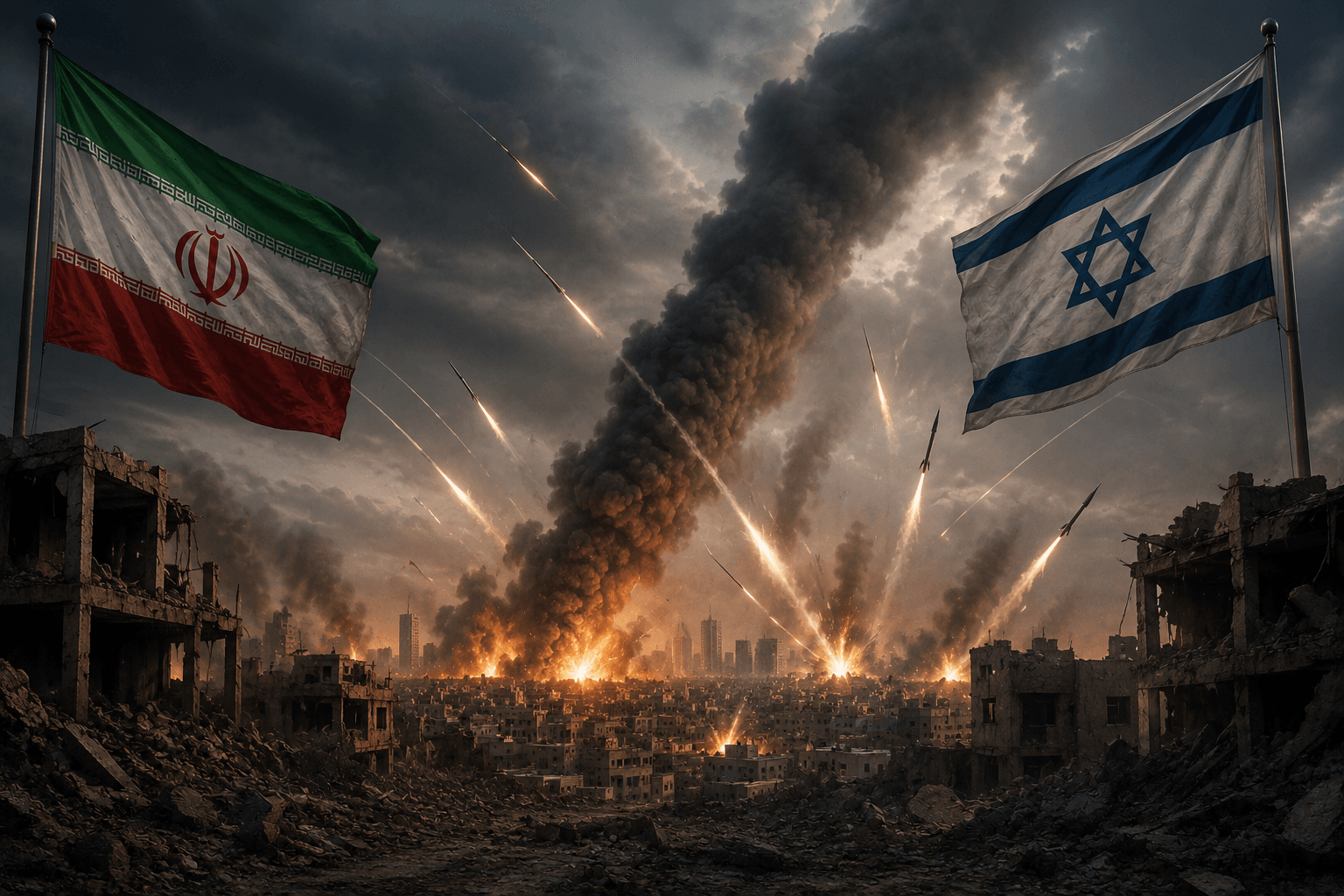

The conflict between Iran and Israel has become one of the most significant geopolitical crises in the Middle East. What began as decades of political hostility, proxy conflicts, and strategic rivalry has evolved into periods of direct military confrontation, drawing the attention of governments, international organizations, and global markets.
Recent developments have intensified concerns about regional stability, energy security, international diplomacy, and the possibility of a wider conflict involving multiple nations. While military operations and diplomatic efforts continue, the Iran-Israel confrontation remains a defining issue in global affairs.
This article examines the origins of the conflict, key developments, military dimensions, regional implications, economic consequences, humanitarian concerns, and potential paths toward de-escalation.
Historical Background
Relations between Iran and Israel have not always been hostile. Prior to the Iranian Revolution of 1979, the two countries maintained diplomatic and economic ties.
Following the revolution, Iran’s new leadership adopted a strongly anti-Israel position, fundamentally altering relations between the two states. Since then, political tensions, ideological disagreements, and competing regional interests have contributed to a prolonged rivalry.
Over the decades, the confrontation expanded beyond direct diplomacy and increasingly involved proxy groups, intelligence operations, cyber activities, and regional influence campaigns.
The Strategic Rivalry
At its core, the Iran-Israel conflict is driven by competing visions for the future of the Middle East.
Israel views Iran’s military capabilities, missile programs, and regional alliances as major security concerns. Iran, meanwhile, views Israeli policies and military actions as threats to regional stability and its strategic interests.
Both nations have invested heavily in military preparedness and intelligence capabilities, making the rivalry one of the most complex security challenges in the region.
The Role of Proxy Conflicts
For many years, much of the confrontation occurred through proxy conflicts rather than direct warfare.
Various regional groups and allied organizations became involved in conflicts linked to broader Iran-Israel tensions. These confrontations often occurred in countries such as Lebanon, Syria, Iraq, and Yemen.
Proxy conflicts allowed both sides to pursue strategic objectives while attempting to avoid large-scale direct war.
Direct Military Escalation
Recent years have seen a significant shift toward direct military exchanges between Iran and Israel.
Missile strikes, drone attacks, air operations, and retaliatory actions have increased concerns about a broader regional war. Military operations have targeted strategic infrastructure, military facilities, and security assets.
These developments have raised fears that localized incidents could rapidly escalate into wider conflict involving additional regional and international actors.
Missile and Drone Warfare
Modern missile and drone technologies have become central components of the conflict.
Long-range missile systems, precision-guided weapons, and unmanned aerial vehicles have transformed the nature of military operations in the region.
Both offensive and defensive systems play critical roles in determining military effectiveness and strategic deterrence.
The widespread use of drones has also highlighted the growing importance of emerging military technologies.
Intelligence and Cyber Operations
The conflict extends beyond conventional military activities.
Cybersecurity experts and intelligence agencies have frequently reported cyber operations targeting infrastructure, communication networks, and government systems.
These activities illustrate how modern conflicts increasingly involve digital warfare alongside traditional military engagements.
Cyber operations can disrupt critical services and create strategic advantages without direct battlefield confrontation.
Regional Impact
The Iran-Israel conflict affects the entire Middle East.
Neighboring countries often face security challenges, refugee concerns, economic disruptions, and diplomatic pressures resulting from escalating tensions.
Regional governments frequently engage in diplomatic efforts aimed at preventing further escalation and preserving stability.
The conflict’s geographic reach means that developments in one area can have significant consequences across the region.
Global Energy Markets
One of the most significant international concerns involves energy security.
The Middle East remains a critical region for global oil and gas supplies. Any disruption to major shipping routes or energy infrastructure can influence global energy prices and economic stability.
Markets closely monitor developments involving the Strait of Hormuz, one of the world’s most important maritime trade routes. Concerns over shipping disruptions have repeatedly influenced oil prices and investor confidence. :contentReference[oaicite:0]{index=0}
International Diplomacy
Diplomatic efforts have played an essential role in attempts to manage tensions.
Major world powers, international organizations, and regional governments have sought to facilitate negotiations, ceasefires, and confidence-building measures.
Recent diplomatic discussions have focused on reducing hostilities, preventing wider escalation, and addressing broader security concerns. International leaders continue to support efforts aimed at achieving long-term stability. :contentReference[oaicite:1]{index=1}
Humanitarian Consequences
Conflicts inevitably have humanitarian consequences for civilian populations.
Military operations can result in displacement, infrastructure damage, disruptions to healthcare services, and economic hardship.
Humanitarian organizations often face challenges delivering assistance in areas affected by ongoing hostilities.
Protecting civilian populations remains a major concern for international relief agencies and policymakers.
The Role of Major Powers
The conflict has attracted attention from major global powers due to its strategic importance.
The United States has historically maintained strong ties with Israel while also engaging in diplomatic discussions concerning Iran.
European countries, Gulf states, and other international actors have likewise participated in efforts to reduce tensions and promote regional stability.
The involvement of major powers increases both the complexity and significance of the conflict.
Economic Effects Beyond the Region
The consequences of the Iran-Israel conflict extend beyond the Middle East.
Financial markets, international trade, supply chains, and energy-dependent industries may all experience indirect effects during periods of heightened tension.
Investors often respond to geopolitical uncertainty by adjusting risk assessments and investment strategies.
As a result, developments in the conflict can influence economic conditions far beyond the immediate region.
Challenges to Lasting Peace
Achieving a durable resolution remains difficult due to deep-rooted political, security, and ideological disagreements.
Issues such as regional influence, military capabilities, security guarantees, and long-standing mistrust complicate diplomatic negotiations.
Building confidence between adversaries requires sustained engagement and significant political commitment from all parties involved.
Recent Developments
Recent reports indicate continued tensions alongside ongoing diplomatic efforts aimed at preventing a wider regional conflict. While ceasefire discussions and international negotiations have shown some progress, military incidents and regional disputes continue to challenge stability. International observers remain focused on preventing escalation and encouraging long-term diplomatic solutions. :contentReference[oaicite:2]{index=2}
Future Outlook
The future of the Iran-Israel conflict will likely depend on a combination of military deterrence, diplomatic engagement, regional cooperation, and international mediation.
While the risk of renewed escalation remains present, continued dialogue may provide opportunities for reducing tensions and addressing underlying security concerns.
The actions of regional leaders, international organizations, and global powers will play an important role in shaping future outcomes.
Conclusion
The Iran-Israel conflict represents one of the most complex and consequential geopolitical challenges of the modern era. Rooted in decades of rivalry and shaped by regional dynamics, the confrontation affects security, diplomacy, economics, and humanitarian conditions across the Middle East and beyond.
As military tensions and diplomatic efforts continue, the international community remains focused on preventing further escalation and encouraging peaceful solutions. The path forward will require careful diplomacy, regional cooperation, and a commitment to reducing the risks associated with one of the world’s most closely watched conflicts.





Leave a Reply