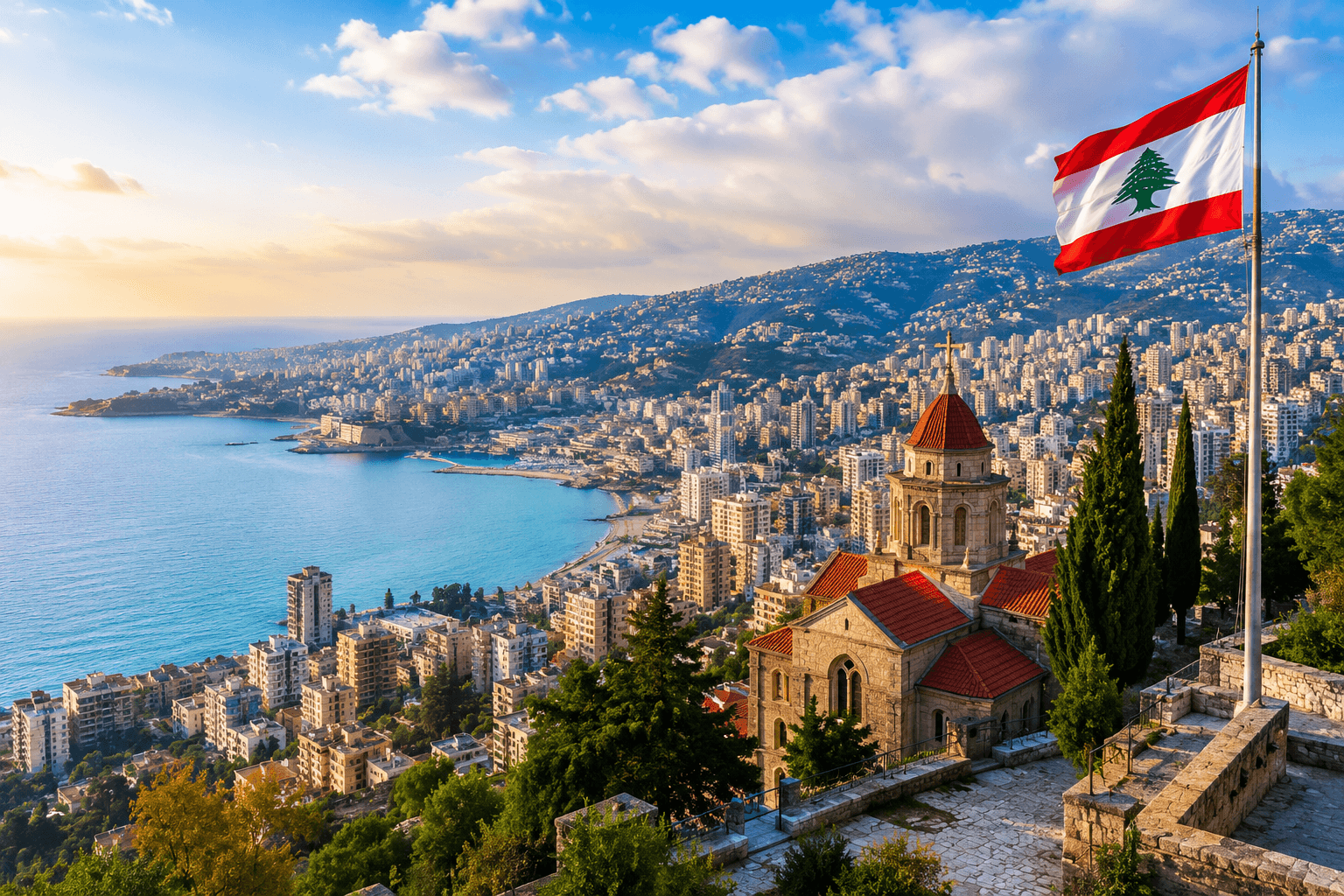

Lebanon is a small but historically significant country located on the eastern shore of the Mediterranean Sea. Known for its rich cultural heritage, diverse religious communities, and strategic geographic position, Lebanon has played an important role in regional and global history for thousands of years.
Despite its relatively small size, Lebanon has been a center of trade, culture, and intellectual development since ancient times. However, in recent decades, the country has also faced significant political instability, economic crises, and social challenges.
This article explores Lebanon’s history, geography, culture, economy, and the modern issues shaping its future.
Geography and Strategic Location
Lebanon is located in Western Asia, bordered by Syria to the north and east, and Israel to the south, with the Mediterranean Sea to the west. Its coastline stretches for approximately 225 kilometers, giving it access to important maritime trade routes.
The country’s geography is highly diverse, featuring coastal plains, fertile valleys, and mountainous regions such as the Lebanon Mountains and the Anti-Lebanon range.
This geographic diversity has contributed to varied agricultural production and distinct regional lifestyles within the country.
Ancient History and Civilization
Lebanon has one of the oldest recorded histories in the world. It was home to the ancient Phoenician civilization, which flourished along the Mediterranean coast around 3000 BCE.
The Phoenicians were known as skilled sailors, traders, and innovators of the early alphabet system, which later influenced Greek and Latin writing systems.
Cities such as Byblos, Tyre, and Sidon became major centers of commerce and culture in the ancient world.
Throughout history, Lebanon came under the influence of various empires, including the Romans, Byzantines, Arabs, Ottomans, and later the French.
Modern Formation of Lebanon
Modern Lebanon was established in the early 20th century following the collapse of the Ottoman Empire after World War I.
Under French mandate rule, Lebanon developed new political and administrative institutions.
In 1943, Lebanon gained independence and established a unique political system based on religious representation known as confessionalism.
This system allocated political power among the country’s major religious communities, including Maronite Christians, Sunni Muslims, and Shia Muslims.
Political System and Governance
Lebanon operates as a parliamentary republic with a complex power-sharing system.
The president is traditionally a Maronite Christian, the prime minister is a Sunni Muslim, and the speaker of parliament is a Shia Muslim.
This structure was designed to maintain balance among Lebanon’s diverse religious communities.
However, in practice, this system has often led to political gridlock and inefficiency, especially during times of national crisis.
Religious and Cultural Diversity
One of Lebanon’s defining characteristics is its religious and cultural diversity. The country is home to numerous religious groups, including Christians, Sunni Muslims, Shia Muslims, Druze, and others.
This diversity has contributed to a rich cultural landscape, where different traditions, languages, and customs coexist.
Lebanon is known for its vibrant arts scene, music, literature, and cuisine, all of which reflect its multicultural identity.
Beirut: The Capital City
Beirut, the capital of Lebanon, is one of the oldest continuously inhabited cities in the world. It has long been a center of commerce, education, and culture in the Middle East.
Before the Lebanese Civil War, Beirut was often referred to as the “Paris of the Middle East” due to its cosmopolitan atmosphere and thriving economy.
Although the city has faced significant destruction and rebuilding over the years, it remains a symbol of resilience and cultural vitality.
Lebanese Civil War
One of the most significant events in modern Lebanese history was the civil war that lasted from 1975 to 1990.
The conflict involved multiple internal and external actors and was driven by political, religious, and regional tensions.
The war resulted in significant loss of life, displacement of populations, and widespread destruction of infrastructure.
The Taif Agreement in 1989 helped bring an end to the conflict and restructured Lebanon’s political system to promote greater balance among its communities.
Economy of Lebanon
Lebanon historically had a service-based economy, with strong sectors in banking, tourism, trade, and education.
Before recent crises, Beirut was considered a major financial hub in the region.
However, in recent years, Lebanon has faced a severe economic crisis characterized by currency devaluation, inflation, and banking sector instability.
The collapse of financial systems has significantly affected daily life for citizens, leading to rising unemployment and poverty levels.
Economic Crisis and Challenges
Since 2019, Lebanon has experienced one of the worst economic crises in its modern history.
The Lebanese pound has lost significant value, and many citizens have lost access to their savings due to banking restrictions.
Factors contributing to the crisis include political instability, public debt, corruption concerns, and reduced foreign investment.
The crisis has also impacted essential services such as electricity, healthcare, and education.
Lebanon’s Diaspora
Lebanon has one of the largest diasporas in the world relative to its population size. Millions of Lebanese people live abroad in countries such as Brazil, the United States, Canada, Australia, and across Europe.
The diaspora plays an important role in supporting Lebanon’s economy through remittances sent back to families.
These global communities also help maintain cultural ties and promote Lebanese heritage internationally.
Culture, Food, and Traditions
Lebanese culture is known for its hospitality, cuisine, and artistic expression.
Traditional Lebanese food includes dishes such as hummus, tabbouleh, kibbeh, falafel, and shawarma.
Food plays a central role in social life and family gatherings.
Music and dance, including traditional Dabke, are also important cultural elements in celebrations and festivals.
Education and Innovation
Lebanon has a strong tradition of education, with several well-known universities such as the American University of Beirut and Lebanese University.
Education has historically been a priority in Lebanese society, contributing to a highly skilled workforce.
Despite economic challenges, Lebanon continues to produce professionals in fields such as medicine, engineering, and business.
Tourism and Natural Beauty
Lebanon is known for its natural beauty, including Mediterranean beaches, snow-capped mountains, and historic archaeological sites.
Popular destinations include the Jeita Grotto, Baalbek ruins, Byblos ancient city, and the Cedars of God forest.
Tourism has traditionally been an important part of the Lebanese economy, attracting visitors interested in history, culture, and nature.
Modern Political Challenges
Lebanon continues to face political challenges related to governance, corruption concerns, and regional tensions.
Frequent political disagreements have contributed to delays in reforms and economic recovery efforts.
International organizations and foreign governments have called for structural reforms to stabilize the economy and improve governance.
Resilience and Future Outlook
Despite its many challenges, Lebanon is known for the resilience of its people.
Lebanese citizens have shown determination in rebuilding communities, supporting families, and maintaining cultural identity during difficult times.
The country’s future depends on political stability, economic reform, and international cooperation.
With its rich history and cultural strength, Lebanon continues to hold significant potential for recovery and development.
Conclusion
Lebanon is a country of deep historical significance, cultural diversity, and complex modern challenges. From its ancient Phoenician roots to its role as a modern Mediterranean nation, Lebanon has always been a crossroads of civilizations.
While the country currently faces economic and political difficulties, its cultural richness and resilient population remain key strengths.
Understanding Lebanon requires looking at both its historic achievements and its present struggles, as both shape its identity and future direction.





Leave a Reply