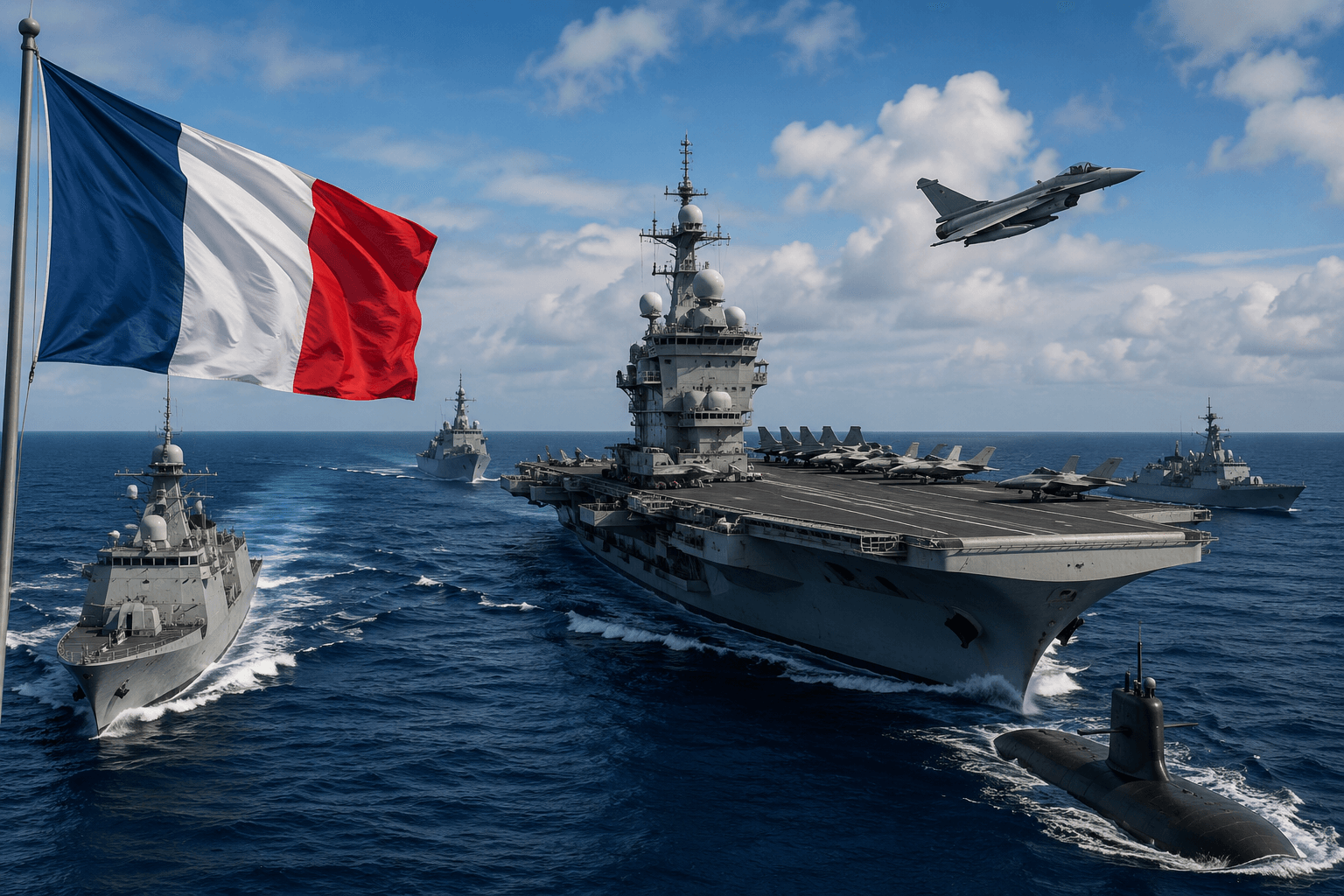

The French Navy, officially known as the Marine Nationale, is one of the oldest and most respected naval forces in the world. With a history stretching back centuries, the navy has played a crucial role in protecting France’s interests, maintaining global maritime security, and projecting military power across international waters. Today, the French Navy stands as a technologically advanced and strategically important force within Europe and NATO.
From historic naval battles to modern aircraft carriers and nuclear submarines, the French Navy combines tradition with innovation. It continues to influence global maritime operations while adapting to the changing challenges of the 21st century.
History of the French Navy
The origins of the French Navy date back to the Middle Ages, but it became a major military force during the 17th century under the leadership of Cardinal Richelieu and King Louis XIV. During this period, France invested heavily in naval expansion to compete with powerful maritime nations such as Britain and Spain.
Throughout history, the French Navy participated in many significant conflicts, including the American Revolutionary War, the Napoleonic Wars, and both World Wars. French naval forces helped support American independence against British rule during the late 18th century. However, the navy also faced major defeats, especially during the Napoleonic era, where British naval superiority became dominant.
During World War II, the French Navy experienced a complex and difficult period. After the fall of France in 1940, parts of the navy joined the Free French Forces under General Charles de Gaulle, while others remained under the control of the Vichy government. Despite these challenges, French naval personnel contributed significantly to Allied operations throughout the war.
After World War II, France rebuilt and modernized its naval capabilities. Today, the French Navy is recognized as one of the world’s leading maritime forces with advanced technology, global reach, and nuclear deterrence capabilities.
Role and Responsibilities
The French Navy performs several important missions that contribute to national defense and international security. Its primary responsibilities include:
- Protecting French territorial waters and overseas territories
- Maintaining nuclear deterrence through ballistic missile submarines
- Conducting anti-terrorism and anti-piracy operations
- Supporting humanitarian and rescue missions
- Participating in NATO and international military operations
- Ensuring maritime trade security and freedom of navigation
France possesses one of the largest exclusive economic zones (EEZs) in the world due to its overseas territories spread across different oceans. As a result, the French Navy has a global operational presence, allowing it to monitor strategic sea routes and protect French interests worldwide.
Structure of the French Navy
The French Navy consists of several specialized branches designed to handle different types of maritime operations. These branches work together to ensure the effectiveness of naval missions.
Surface Fleet
The surface fleet includes aircraft carriers, destroyers, frigates, patrol vessels, and amphibious assault ships. These ships are used for combat operations, surveillance, escort duties, and humanitarian missions.
One of the most famous vessels in the French Navy is the Charles de Gaulle, France’s flagship aircraft carrier. It is the only nuclear-powered aircraft carrier outside the United States Navy. The carrier allows France to project air power globally and participate in international military operations.
Submarine Force
The French submarine fleet is a critical component of national defense. France operates both nuclear-powered attack submarines and ballistic missile submarines.
The ballistic missile submarines form part of France’s nuclear deterrence strategy. These submarines remain hidden underwater for long periods and can launch nuclear missiles if necessary. This capability ensures France maintains an independent nuclear defense system.
Naval Aviation
The French Navy also operates aircraft and helicopters for reconnaissance, combat, rescue, and anti-submarine warfare. Naval aviation plays an essential role in supporting fleet operations and expanding the navy’s reach.
Fighter jets such as the Rafale Marine operate from the aircraft carrier Charles de Gaulle. These aircraft are capable of carrying out precision strikes, air defense missions, and reconnaissance operations.
Marine Commandos
The French Navy includes elite special forces units known as the Marine Commandos. These commandos conduct counter-terrorism operations, hostage rescues, reconnaissance missions, and amphibious assaults.
Highly trained and equipped, they are considered among the best naval special forces in the world and often cooperate with allied military units during international operations.
Modern Technology and Innovation
The French Navy is known for investing heavily in advanced military technology. Modern naval warfare requires sophisticated communication systems, stealth capabilities, cyber defense, and precision weapons.
French naval vessels are equipped with advanced radar systems, missile defense technologies, and electronic warfare capabilities. Nuclear propulsion systems provide long operational endurance for aircraft carriers and submarines.
France is also focusing on unmanned systems and artificial intelligence to improve surveillance and operational efficiency. Naval drones and autonomous underwater vehicles are becoming increasingly important for future maritime operations.
Cybersecurity has also become a major priority. Modern naval systems rely heavily on digital networks, making cyber defense essential for protecting military infrastructure and communication systems.
The French Navy and NATO
France plays an active role within NATO and regularly participates in multinational naval exercises and security operations. The French Navy often cooperates with allied forces from the United States, the United Kingdom, and other European nations.
French naval forces contribute to operations in the Mediterranean Sea, the Atlantic Ocean, the Indian Ocean, and other strategic regions. These missions include anti-piracy patrols, counter-terrorism efforts, and maintaining maritime stability.
The French Navy’s ability to deploy globally makes it a valuable partner in international security operations. Its modern fleet and nuclear capabilities strengthen Europe’s overall defense posture.
Humanitarian and Rescue Operations
In addition to military missions, the French Navy frequently participates in humanitarian and disaster relief operations. Naval ships and helicopters provide emergency assistance during natural disasters, evacuations, and humanitarian crises.
French naval vessels have delivered medical aid, food supplies, and rescue support to regions affected by hurricanes, earthquakes, and conflicts. The navy’s ability to operate worldwide allows France to respond quickly during emergencies.
Search and rescue operations are another important responsibility. French naval personnel regularly assist ships and individuals in distress at sea, helping save lives and maintain maritime safety.
Challenges Facing the French Navy
Like many modern military forces, the French Navy faces several evolving challenges. Rising geopolitical tensions, cyber threats, and increasing competition in strategic maritime regions require constant adaptation.
The Indo-Pacific region has become particularly important due to growing international rivalry and trade interests. France maintains territories and military assets in the region, making naval presence essential.
Budget pressures and the high cost of advanced military technology also present challenges. Maintaining nuclear submarines, aircraft carriers, and modern warships requires significant investment.
Climate change is another emerging concern. Rising sea levels, extreme weather events, and environmental changes can impact naval operations and maritime security.
The Future of the French Navy
The French Navy is actively preparing for the future through modernization programs and technological innovation. France plans to develop next-generation warships, submarines, and aircraft to maintain its strategic capabilities.
A new aircraft carrier is expected to eventually replace the Charles de Gaulle in the coming decades. The future carrier will likely feature advanced technologies, improved combat systems, and enhanced operational capabilities.
France is also strengthening cooperation with European allies to improve regional security and defense coordination. Joint military exercises and shared defense initiatives are becoming increasingly important in addressing global security challenges.
Artificial intelligence, autonomous systems, and cyber warfare capabilities will continue to shape the future of naval operations. The French Navy aims to remain at the forefront of these developments while preserving its traditional strengths.
Conclusion
The French Navy remains one of the world’s most capable and respected maritime forces. With a rich history, global operational reach, and advanced technology, it plays a vital role in protecting France’s national interests and contributing to international security.
From nuclear submarines and aircraft carriers to humanitarian missions and anti-piracy operations, the French Navy demonstrates versatility and professionalism across a wide range of responsibilities. As global security challenges continue to evolve, the Marine Nationale is adapting through innovation, modernization, and international cooperation.
Its commitment to excellence ensures that the French Navy will continue to be a major force on the world’s oceans for many years to come.





Leave a Reply