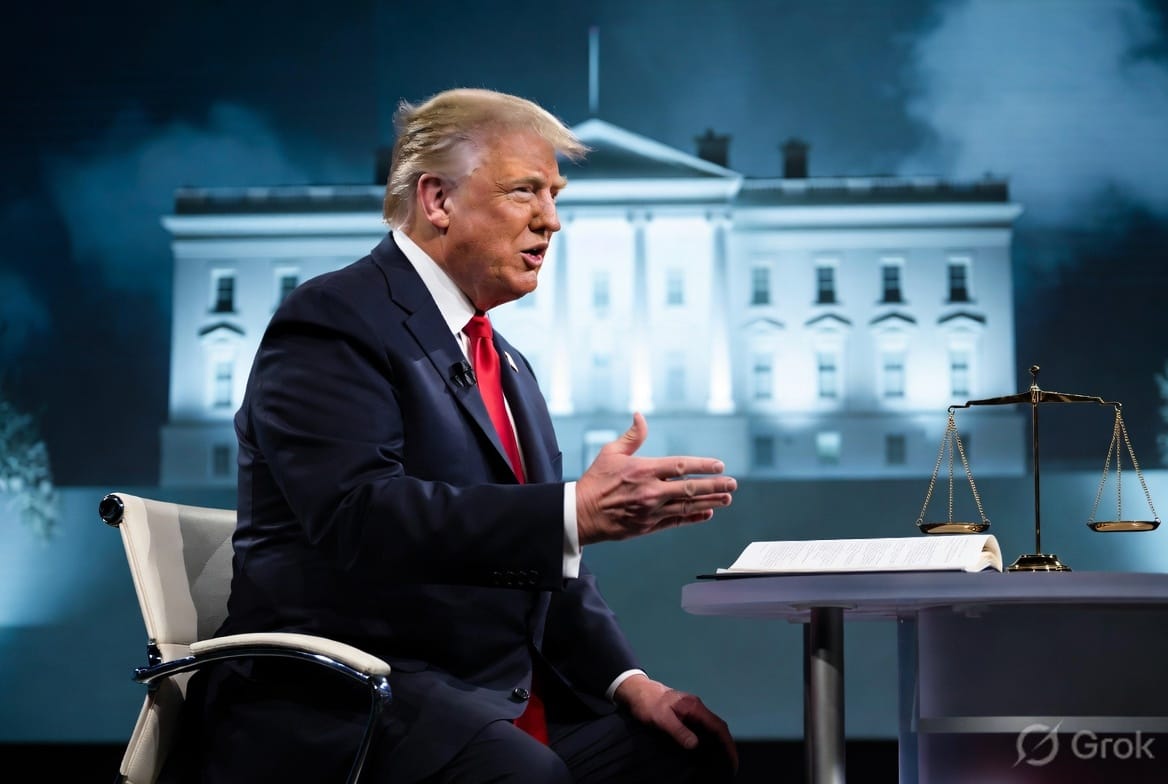

Presidential power has long been one of the most debated topics in American politics. Every administration faces questions about the scope of executive authority, constitutional checks and balances, and the limits placed on the office of the President of the United States. These discussions often intensify during periods of political polarization, legal disputes, and major policy decisions.
Recent attention surrounding interviews, public statements, and policy discussions involving former President Donald Trump has renewed interest in the question of presidential power limits. Political observers, constitutional scholars, lawmakers, and voters continue to debate how much authority presidents should possess and what safeguards exist to prevent abuses of power.
The discussion gained further visibility through media interviews and public commentary examining executive authority, constitutional responsibilities, and the relationship between the presidency and other branches of government.
This article explores the concept of presidential power, constitutional limitations, historical precedents, legal debates, and why discussions about executive authority remain central to American democracy.
Understanding Presidential Power
The President of the United States serves as the head of the executive branch and is responsible for enforcing federal laws, directing foreign policy, serving as commander-in-chief of the armed forces, and overseeing numerous federal agencies.
While the presidency is one of the most powerful offices in the world, it is not unlimited.
The U.S. Constitution establishes a framework designed to balance executive authority with legislative and judicial oversight.
This structure helps ensure that no single branch of government becomes overwhelmingly powerful.
The Constitutional Foundation
The Constitution outlines the powers and responsibilities of the presidency in Article II.
These powers include:
- Executing federal laws
- Serving as commander-in-chief
- Negotiating treaties
- Appointing federal officials
- Issuing executive orders
- Granting pardons
However, many presidential actions require cooperation with Congress or are subject to judicial review.
This framework reflects the Founders’ desire to create a strong yet limited executive branch.
The Principle of Checks and Balances
One of the most important features of the American constitutional system is the principle of checks and balances.
This system allows each branch of government to limit the authority of the others.
Examples include:
- Congress passing legislation
- Presidential veto authority
- Congressional override powers
- Judicial review of executive actions
- Senate confirmation of appointments
- Congressional oversight investigations
These mechanisms help maintain institutional balance.
Why Presidential Power Is Frequently Debated
Questions about presidential authority arise because modern presidents face increasingly complex challenges.
National security threats, economic crises, public health emergencies, and international conflicts often require rapid decision-making.
As presidents respond to these challenges, debates frequently emerge regarding the appropriate limits of executive action.
Critics and supporters may disagree about whether certain actions fall within constitutional boundaries.
Executive Orders and Their Role
Executive orders are among the most visible tools available to presidents.
These directives allow the executive branch to manage federal operations and implement policy within existing legal authority.
While executive orders can be influential, they are not laws passed by Congress.
Courts may review executive orders, and future administrations may modify or revoke them.
This demonstrates the continuing interaction between executive authority and constitutional limitations.
Historical Debates Over Executive Authority
Questions regarding presidential power are not unique to any single administration.
Throughout American history, presidents have faced scrutiny regarding the extent of their authority.
Major debates have occurred during:
- Wars and military conflicts
- Economic emergencies
- Civil rights disputes
- National security crises
- Public health emergencies
Each generation has grappled with balancing effective leadership and constitutional restraint.
The Role of Congress
Congress serves as a critical check on presidential power.
As the legislative branch, Congress possesses authority over federal spending, lawmaking, oversight, and impeachment proceedings.
Members of Congress frequently evaluate executive actions and may challenge policies they believe exceed constitutional authority.
This oversight function plays an important role in maintaining accountability.
The Judiciary’s Influence
Federal courts also help define the limits of presidential power.
When legal disputes arise, judges may determine whether executive actions comply with constitutional requirements and federal law.
The Supreme Court, in particular, has issued numerous decisions that clarify the scope of executive authority.
These rulings often shape future interpretations of presidential powers.
Presidential Immunity and Legal Questions
One area that has generated significant discussion involves presidential immunity and legal accountability.
Legal scholars continue to debate the extent to which current or former presidents may be subject to civil or criminal proceedings.
These discussions often involve constitutional interpretation, historical precedent, and judicial decisions.
The topic remains an important aspect of broader debates about executive power limits.
National Security and Executive Authority
National security issues frequently expand discussions about presidential powers.
Presidents often possess broad authority in matters involving military operations, intelligence activities, and foreign affairs.
At the same time, Congress retains important responsibilities related to war powers, defense funding, and oversight.
Balancing these responsibilities remains an ongoing challenge.
Public Opinion and Executive Power
Public attitudes toward presidential authority often vary depending on political circumstances.
Supporters may favor strong executive action when it aligns with their policy preferences, while critics may emphasize constitutional limitations.
These shifting perspectives illustrate how debates about presidential power frequently intersect with broader political disagreements.
Public opinion can influence legislative responses and political discourse.
The Media’s Role in the Debate
Media organizations play a significant role in shaping public understanding of presidential authority.
Interviews, investigative reporting, opinion analysis, and expert commentary help inform citizens about constitutional questions and policy decisions.
High-profile interviews often generate national discussions about the responsibilities and limits of executive leadership.
These conversations contribute to ongoing democratic engagement.
Political Perspectives on Presidential Power
Different political philosophies often approach executive authority in distinct ways.
Some argue that strong executive leadership is necessary to address modern challenges efficiently.
Others emphasize the importance of limiting executive power to protect democratic institutions and prevent government overreach.
These competing perspectives have shaped American political debates for generations.
The Importance of Constitutional Guardrails
Constitutional guardrails exist to preserve democratic governance and individual liberties.
These protections include:
- Separation of powers
- Federalism
- Judicial review
- Congressional oversight
- Regular elections
- Constitutional amendments
Together, these mechanisms help ensure that executive authority remains accountable to legal and democratic principles.
Future Debates Over Executive Power
Discussions about presidential authority are likely to continue regardless of which political party occupies the White House.
Emerging technologies, cybersecurity threats, global conflicts, economic challenges, and evolving legal questions will create new situations requiring executive decision-making.
As these issues arise, courts, lawmakers, scholars, and voters will continue evaluating the appropriate limits of presidential power.
Conclusion
The debate over presidential power limits remains one of the most important constitutional discussions in American politics. Questions regarding executive authority, congressional oversight, judicial review, and constitutional accountability have shaped the nation’s political system since its founding.
Whether examined through media interviews, legal disputes, historical precedents, or public policy debates, the issue of presidential power continues to influence governance and democratic institutions. As future administrations confront new challenges, the balance between effective leadership and constitutional restraint will remain a defining feature of the American political system.


Leave a Reply