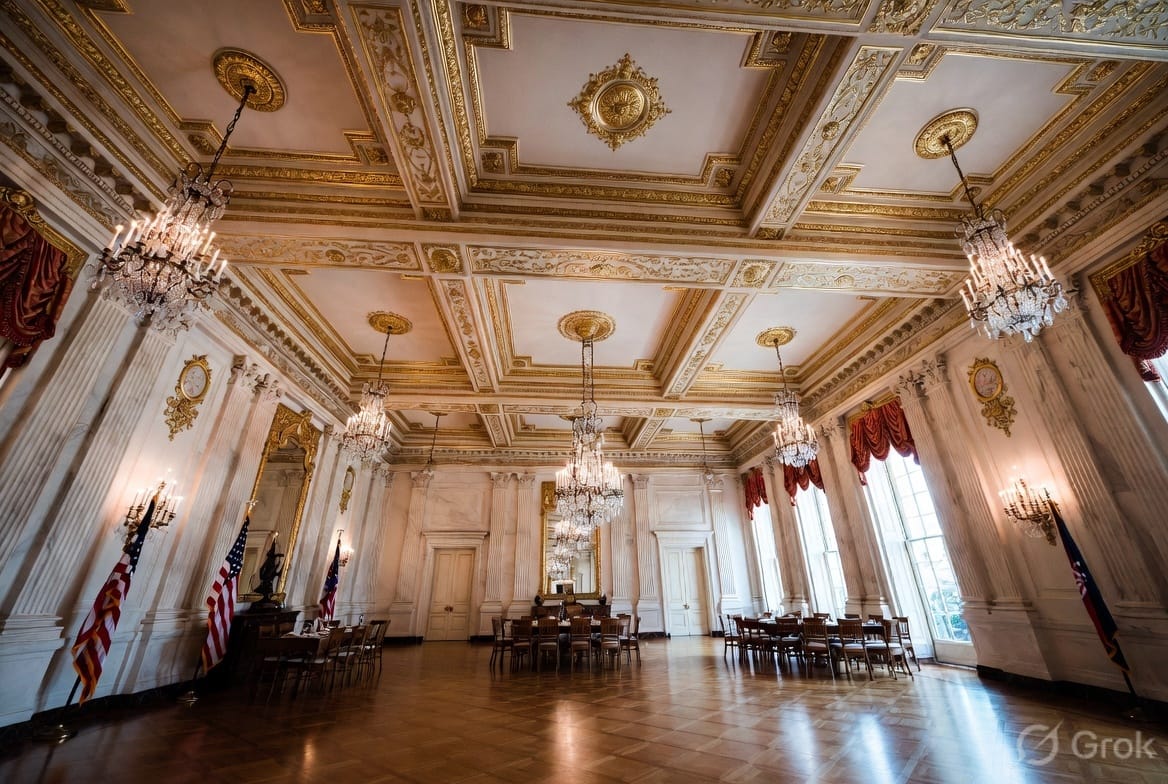

The White House has long served as both the official residence of the President of the United States and a symbol of American democracy. For more than two centuries, it has hosted world leaders, state dinners, diplomatic meetings, ceremonial events, and historic celebrations. As the demands placed on the White House have evolved, discussions about expanding its event-hosting capabilities have become increasingly significant.
One of the most talked-about proposals in recent years is the concept of a White House State Ballroom. Supporters argue that a dedicated ballroom would provide a modern venue for official functions while preserving historic spaces within the White House itself. Critics and supporters alike have debated the project’s cost, design, historical implications, and potential benefits.
The idea of a White House State Ballroom represents more than a construction project. It reflects broader discussions about balancing tradition with modernization, preserving national heritage while meeting contemporary needs, and ensuring that one of America’s most iconic buildings remains functional for future generations.
The Historical Importance of the White House
The White House has served as the home of every U.S. president since John Adams moved into the building in 1800. Located in Washington, D.C., it stands as one of the most recognizable government buildings in the world.
Throughout its history, the White House has been a center of political decision-making, diplomacy, and ceremonial activity. It has welcomed kings, queens, presidents, prime ministers, diplomats, military leaders, and distinguished guests from around the globe.
Its role extends beyond politics, serving as a symbol of national identity and democratic governance.
The Growing Need for Event Space
Modern presidential administrations host a wide variety of events throughout the year. These include:
- State dinners
- Diplomatic receptions
- Award ceremonies
- Cultural celebrations
- Official meetings
- Press events
- Holiday gatherings
As attendance at these events has increased over the years, limitations within the existing White House facilities have become more noticeable.
Many large events require temporary structures or alternative arrangements due to space constraints.
What Is the White House State Ballroom?
The White House State Ballroom proposal envisions a dedicated venue designed specifically for large-scale official events and diplomatic gatherings.
The concept typically involves constructing a substantial ballroom adjacent to or near the existing White House complex while maintaining architectural compatibility with the historic building.
The proposed facility would be capable of accommodating significantly more guests than existing event spaces within the White House.
Such a venue could reduce reliance on temporary structures often used during major state functions.
Why the Proposal Has Gained Attention
The proposal has generated interest because it addresses practical challenges faced by modern administrations.
Hosting international leaders, dignitaries, and large delegations often requires extensive planning and logistical support.
A purpose-built ballroom could streamline event operations and improve the overall guest experience.
Supporters view it as a modernization effort that respects the White House’s historical significance while enhancing its functionality.
State Dinners and Diplomatic Events
State dinners are among the most prestigious events hosted by the White House.
These occasions serve important diplomatic purposes, helping strengthen relationships between the United States and other nations.
State dinners often involve:
- Foreign heads of state
- Diplomatic delegations
- Cabinet officials
- Business leaders
- Cultural figures
- Military representatives
A dedicated ballroom could provide an enhanced setting for such high-profile gatherings.
Preserving Historic Interior Spaces
One argument frequently advanced by supporters of a ballroom project is that it could help preserve historic White House rooms.
Many existing spaces serve multiple functions and experience significant wear due to frequent use.
By relocating large events to a dedicated ballroom, preservation efforts could focus more effectively on maintaining historically significant areas.
This approach could potentially reduce stress on some of the White House’s most treasured rooms.
Architectural Considerations
Any expansion of the White House complex would require careful architectural planning.
Designers would need to balance modern functionality with historical aesthetics.
Key considerations might include:
- Architectural compatibility
- Security requirements
- Visitor accessibility
- Environmental sustainability
- Preservation standards
The goal would be to create a facility that complements the existing White House rather than competing with it.
Historical Preservation Concerns
Historic preservation advocates often emphasize the importance of protecting national landmarks.
Any modifications to the White House complex would likely undergo extensive review to ensure historical integrity remains intact.
Preservation experts generally seek solutions that maintain the character and significance of iconic structures while accommodating modern needs.
These considerations would play a major role in evaluating any ballroom proposal.
Security Requirements
Security is a central consideration for all White House operations.
Any new facility would need to meet rigorous security standards designed to protect:
- The President
- Government officials
- Foreign dignitaries
- Staff members
- Visitors
Modern security technologies and infrastructure would likely be integrated into the design from the earliest planning stages.
Potential Economic Impact
Construction of a major government facility could generate economic activity through planning, engineering, architecture, and construction services.
In addition to direct employment opportunities, such a project could involve partnerships with skilled craftsmen, preservation specialists, and design professionals.
Economic considerations often play a role in discussions surrounding major public infrastructure projects.
Public Interest and National Symbolism
The White House occupies a unique place in American culture.
As a result, proposals involving changes to the property often attract widespread public interest.
Citizens frequently view the White House not only as a government building but also as a symbol of national history and identity.
This symbolic importance contributes to the intense attention surrounding expansion proposals.
Comparisons with Other World Leaders’ Residences
Many official residences and government buildings around the world include dedicated spaces for large ceremonial functions.
Examples can be found in presidential palaces, royal residences, and government complexes across Europe, Asia, and other regions.
Supporters of a White House ballroom often point to these facilities as examples of how ceremonial functions can be accommodated without compromising historical significance.
Challenges and Criticism
Like any major public project, the ballroom proposal has faced criticism.
Common concerns include:
- Construction costs
- Preservation issues
- Architectural impact
- Public funding questions
- Political considerations
Critics argue that careful evaluation is necessary before undertaking significant modifications to a historic national landmark.
The Future of the Proposal
The future of a White House State Ballroom depends on numerous factors, including political support, architectural planning, funding arrangements, and public opinion.
Any major expansion would likely involve extensive consultation with historians, architects, preservation experts, government officials, and security professionals.
Such a process would ensure that decisions are made thoughtfully and with consideration for the White House’s unique historical role.
Conclusion
The concept of a White House State Ballroom represents an intriguing blend of tradition and modernization. As the demands placed upon the White House continue to evolve, discussions about expanding event facilities reflect broader questions about preserving history while adapting to contemporary needs.
Whether or not such a ballroom is ultimately constructed, the conversation highlights the enduring importance of the White House as both a working government facility and a symbol of American democracy. Balancing functionality, security, preservation, and national heritage will remain central to any future plans involving one of the world’s most iconic buildings.





Leave a Reply