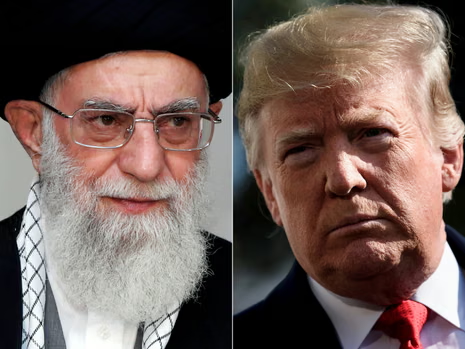

The relationship between former and current U.S. President Donald Trump and Iran has been one of the most consequential and controversial aspects of American foreign policy in recent years. From economic sanctions and military tensions to diplomatic negotiations and ceasefire agreements, Trump’s approach toward Iran has significantly influenced regional stability, global energy markets, and international diplomacy.
Since returning to the White House in 2025, Trump has once again placed Iran at the center of U.S. foreign policy. His administration’s actions have generated intense debate among policymakers, allies, critics, and international observers. Supporters argue that Trump’s strategy has increased pressure on Tehran and strengthened U.S. leverage, while critics contend that his approach has heightened regional tensions and created uncertainty.
As developments continue to unfold, understanding the history, policies, and recent events surrounding Trump and Iran is essential for anyone seeking insight into Middle Eastern geopolitics and global security.
The Historical Context
The United States and Iran have experienced a complicated relationship for decades. Diplomatic ties were severed following the 1979 Iranian Revolution and the subsequent hostage crisis at the U.S. Embassy in Tehran.
Since then, relations have been marked by periods of confrontation, sanctions, proxy conflicts, and intermittent diplomatic efforts.
Iran’s nuclear program, regional influence, support for allied militant groups, and opposition to U.S. interests have remained central issues in bilateral relations.
Trump’s First-Term Iran Policy
During his first presidency, Trump adopted a “maximum pressure” strategy toward Iran.
One of the most significant decisions came in 2018 when the United States withdrew from the Joint Comprehensive Plan of Action (JCPOA), commonly known as the Iran nuclear deal.
The administration argued that the agreement failed to adequately address Iran’s regional activities and long-term nuclear ambitions.
Following the withdrawal, the U.S. imposed extensive economic sanctions aimed at reducing Iran’s oil revenues and limiting its access to international financial systems.
Economic Sanctions and Their Impact
Sanctions became a central component of Trump’s Iran strategy.
Measures targeted:
- Oil exports
- Banking institutions
- Shipping networks
- Government entities
- Key industries
The sanctions significantly affected Iran’s economy, contributing to inflation, currency depreciation, and reduced government revenue.
Supporters viewed the policy as an effective means of applying pressure, while critics raised concerns about humanitarian consequences and diplomatic isolation.
Military Escalation and Regional Tensions
Trump’s Iran policy also involved periods of heightened military tension.
Several incidents in the Persian Gulf and broader Middle East increased concerns about potential conflict between the two nations.
Regional allies closely monitored developments, while global markets reacted to fears of disruptions in oil supplies and maritime trade routes.
The possibility of direct confrontation remained a recurring concern throughout Trump’s first term.
Trump’s Return to Office
Following his return to the presidency in 2025, Trump inherited a complex geopolitical environment involving Iran, Israel, Gulf nations, and broader Middle Eastern security concerns.
His administration quickly became involved in renewed negotiations, military planning, and diplomatic initiatives related to Iran.
Observers debated whether Trump would pursue confrontation, negotiation, or a combination of both strategies.
The 2026 U.S.-Iran Conflict
One of the most significant developments occurred during the 2026 conflict involving the United States and Iran. Tensions escalated dramatically, leading to military exchanges, concerns about regional stability, and disruptions affecting global energy markets. Multiple reports indicated that the situation brought both nations closer to a broader confrontation than at any point in recent years. :contentReference[oaicite:0]{index=0}
The conflict attracted global attention due to its potential impact on international trade, energy supplies, and regional security arrangements.
The Strait of Hormuz Factor
The Strait of Hormuz remains one of the world’s most strategically important waterways.
A significant percentage of global oil shipments pass through the narrow maritime corridor connecting the Persian Gulf to international markets.
During periods of heightened tension, concerns about shipping disruptions contributed to volatility in global energy markets and increased diplomatic pressure for a negotiated solution. :contentReference[oaicite:1]{index=1}
Trump’s Negotiation Strategy
Despite strong rhetoric and military pressure, Trump also pursued negotiations with Iranian leaders.
Throughout 2026, reports emerged regarding backchannel communications, ceasefire discussions, and diplomatic initiatives aimed at reducing tensions. Multiple international actors participated in mediation efforts designed to prevent a prolonged conflict. :contentReference[oaicite:2]{index=2}
The negotiations reflected the administration’s effort to balance pressure with diplomacy.
The U.S.-Iran Agreement
In June 2026, Trump announced that the United States and Iran had reached an agreement intended to halt hostilities and reopen the Strait of Hormuz. Reports indicated that the framework included provisions related to maritime security, ceasefire arrangements, and future negotiations concerning broader issues. :contentReference[oaicite:3]{index=3}
The announcement was described by supporters as a major diplomatic achievement and by critics as only a preliminary step toward a more comprehensive settlement.
Challenges to Lasting Peace
While agreements can reduce immediate tensions, achieving long-term stability remains challenging.
Several issues continue to complicate relations:
- Iran’s nuclear program
- Regional proxy conflicts
- Sanctions policies
- Military deployments
- Israel-Iran tensions
- Economic disputes
These factors require ongoing diplomatic engagement and careful management.
Political Reactions in the United States
Trump’s Iran policies have generated strong reactions across the American political spectrum.
Supporters argue that his approach demonstrates strength, deterrence, and strategic leverage.
Critics contend that periods of escalation increased risks of war and complicated international alliances.
The debate reflects broader disagreements about the role of military power and diplomacy in U.S. foreign policy.
International Perspectives
Global reactions to Trump’s Iran strategy vary significantly.
Some governments welcome efforts to reduce tensions and maintain freedom of navigation in critical waterways.
Others express concerns regarding unilateral actions, sanctions policies, and the potential consequences of military escalation.
International organizations continue monitoring developments closely.
The Role of Energy Markets
Energy markets are highly sensitive to events involving Iran.
Oil prices often respond quickly to reports of conflict, sanctions, or shipping disruptions.
Because Iran remains a major regional power located near critical energy infrastructure, developments in U.S.-Iran relations frequently influence global economic conditions. :contentReference[oaicite:4]{index=4}
Media Coverage and Public Opinion
Media organizations worldwide have devoted extensive coverage to Trump and Iran.
Public opinion often shifts in response to major events, including military actions, diplomatic breakthroughs, and economic consequences.
Social media has further amplified public engagement by enabling rapid dissemination of information and commentary.
The Future of U.S.-Iran Relations
The future of relations between Washington and Tehran remains uncertain.
Diplomatic progress could lead to broader agreements addressing security, economic cooperation, and nuclear issues.
However, unresolved disputes and regional rivalries continue to present obstacles to lasting reconciliation.
The actions of political leaders, regional actors, and international mediators will likely determine the direction of future developments.
Conclusion
The relationship between Donald Trump and Iran represents one of the most significant geopolitical stories of the modern era. Combining economic sanctions, military pressure, diplomatic negotiations, and strategic calculations, Trump’s approach has profoundly shaped Middle Eastern politics and global security discussions.
Recent agreements and ceasefire efforts suggest that diplomacy remains possible even after periods of intense confrontation. Nevertheless, substantial challenges remain. As U.S.-Iran relations continue evolving, their impact will extend far beyond the two countries, influencing regional stability, energy markets, international diplomacy, and the broader global order for years to come.





Leave a Reply