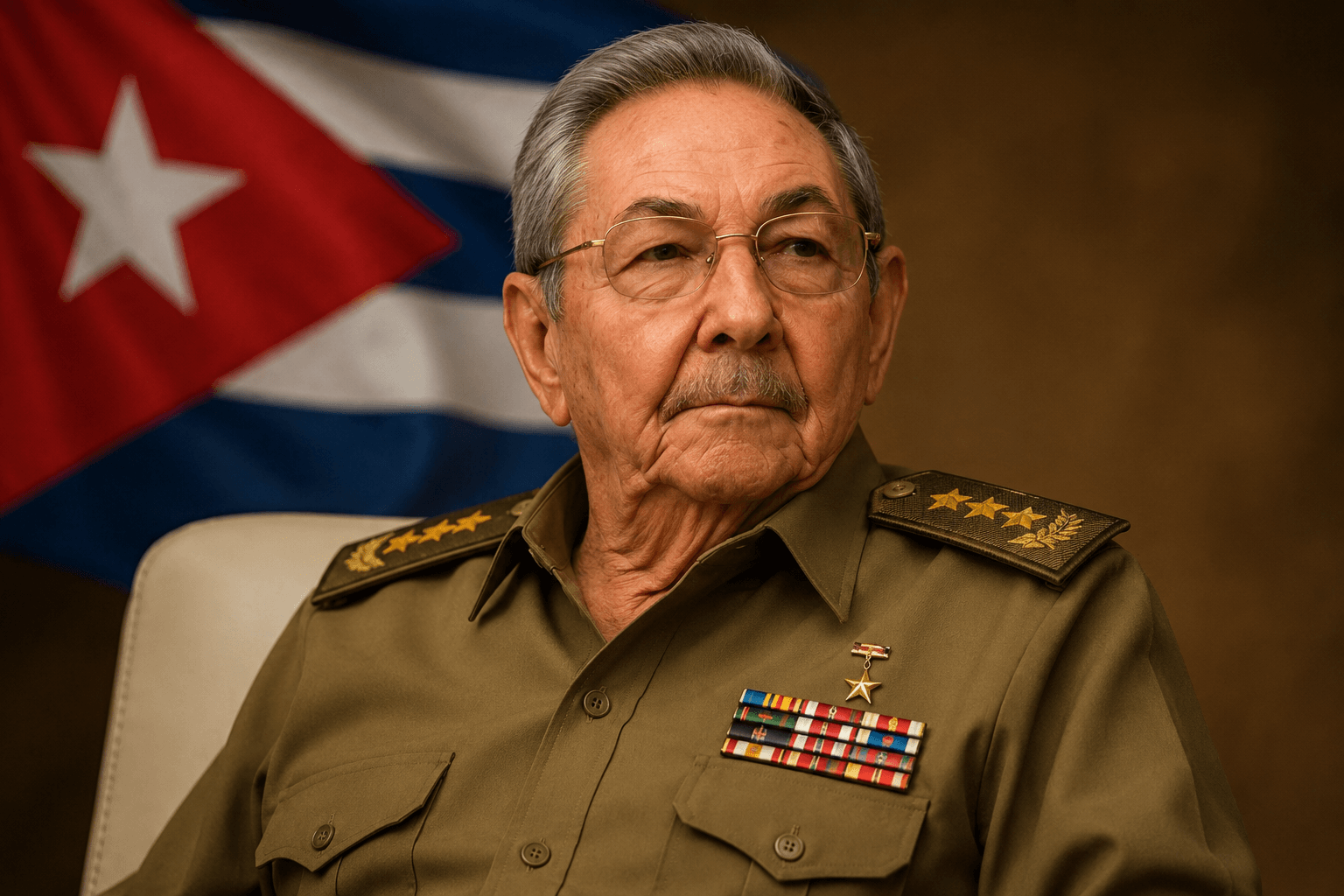

Few political figures in Latin American history have had as much influence on their nation as Raúl Castro. Often recognized as the younger brother of Fidel Castro, Raúl was much more than a supporting figure in the Cuban Revolution. He became a powerful political leader, military strategist, and president who guided Cuba through significant economic and diplomatic changes during the 21st century.
From his early revolutionary days to becoming the President of Cuba, Raúl Castro played a central role in shaping the country’s political structure and international identity. His leadership marked a transition period for Cuba, balancing revolutionary ideals with modernization efforts. Understanding Raúl Castro’s journey offers insight into Cuba’s past, present, and future.
Early Life and Background
Raúl Modesto Castro Ruz was born on June 3, 1931, in Birán, Cuba. He grew up in a relatively wealthy farming family alongside his older brother Fidel Castro. Although the Castro family enjoyed financial stability, the social inequality and political corruption present in Cuba during that era deeply influenced Raúl’s political views.
As a young student, Raúl became interested in socialist and revolutionary ideas. He attended schools in Santiago de Cuba and Havana, where he became politically active. Unlike Fidel, who studied law and gained public attention through speeches and activism, Raúl was often considered quieter and more disciplined. However, his dedication to revolutionary causes was equally strong.
The Cuban Revolution
Raúl Castro became heavily involved in the movement against Cuban dictator Fulgencio Batista during the 1950s. Alongside Fidel Castro and revolutionary leader Che Guevara, Raúl participated in armed resistance aimed at overthrowing Batista’s government.
One of the earliest major events in the revolution was the attack on the Moncada Barracks in 1953. Although the attack failed, it became a symbolic moment in Cuban revolutionary history. Raúl was arrested along with Fidel and later imprisoned. After receiving amnesty, the Castro brothers traveled to Mexico, where they regrouped and prepared for another revolutionary attempt.
In 1956, Raúl joined Fidel and other revolutionaries aboard the yacht Granma, which transported them back to Cuba. The revolutionary group launched guerrilla warfare in the Sierra Maestra mountains. Raúl proved himself as an effective military commander and played an important role in organizing rebel forces.
By January 1959, Batista’s government collapsed, and the revolutionaries entered Havana victorious. The Cuban Revolution dramatically changed the country’s political and economic structure, transforming Cuba into a socialist state.
Role in the Cuban Government
After the revolution, Raúl Castro quickly became one of the most powerful individuals in Cuba. He served as Minister of the Revolutionary Armed Forces for nearly five decades, making him one of the longest-serving defense ministers in modern history.
Under his leadership, Cuba developed a highly organized military system. Raúl was known for his practical management style and ability to maintain strong control over the armed forces. His influence extended beyond military matters into the broader political system.
Raúl also played a major role in strengthening Cuba’s relationship with the Soviet Union during the Cold War. As tensions between Cuba and the United States increased, Cuba relied heavily on Soviet support for economic and military assistance.
Throughout the 1960s, 1970s, and 1980s, Raúl remained one of Fidel Castro’s closest advisors. Although Fidel was often the public face of the revolution, Raúl managed many internal government operations behind the scenes.
Becoming President of Cuba
In 2006, Fidel Castro experienced serious health problems and temporarily transferred power to Raúl Castro. Two years later, in 2008, Raúl officially became the President of Cuba.
His presidency marked a new chapter for the country. While Fidel was associated with strict revolutionary policies and centralized control, Raúl introduced a more pragmatic approach to governance. He acknowledged economic challenges facing Cuba and implemented reforms aimed at improving efficiency and living standards.
One of Raúl’s major goals was modernizing Cuba’s economy without abandoning socialism. He allowed limited private businesses, expanded opportunities for self-employment, and reduced some state restrictions. These changes were significant because Cuba had maintained strict government control over much of the economy for decades.
Economic Reforms and Modernization
Raúl Castro understood that Cuba’s economy needed restructuring. Under his leadership, small businesses such as restaurants, taxi services, and private rentals became more common. Citizens gained more flexibility to buy and sell property, and internet access gradually expanded across the country.
Although the reforms were limited compared to free-market economies, they represented an important shift in Cuban policy. Raúl attempted to balance economic modernization with political stability.
His administration also reduced government bureaucracy and encouraged agricultural productivity. State-owned farms were reorganized, and unused land was distributed to private farmers to increase food production.
Critics argued that reforms did not go far enough, while supporters believed Raúl’s cautious strategy helped maintain social stability during a difficult transition period.
Improved Relations with the United States
One of the most historic moments of Raúl Castro’s presidency came in 2014 when Cuba and the United States announced steps toward restoring diplomatic relations after more than five decades of hostility.
Working alongside U.S. President Barack Obama, Raúl helped reopen communication between the two countries. Embassies were reopened in Havana and Washington, D.C., and travel restrictions were partially eased.
This diplomatic breakthrough attracted international attention and was viewed as a major turning point in U.S.-Cuba relations. Many hoped the improved relationship would strengthen tourism, trade, and cultural exchange.
Despite these improvements, tensions between the two countries continued in later years due to political disagreements and changes in U.S. policy.
Leadership Style and Legacy
Raúl Castro’s leadership style differed significantly from Fidel Castro’s charismatic and highly public approach. Raúl was generally viewed as more reserved, methodical, and practical. He focused on administration, military organization, and gradual reform rather than dramatic public speeches.
Supporters credit Raúl with helping Cuba adapt to modern economic realities while preserving political stability. His reforms opened small opportunities for entrepreneurship and improved Cuba’s international relations during a critical period.
However, critics argue that political freedoms remained restricted under his government. Human rights organizations continued to raise concerns about censorship, limitations on opposition groups, and restrictions on free expression.
Regardless of differing opinions, there is little doubt that Raúl Castro played a defining role in Cuba’s modern history. His influence extended from the revolutionary battlefield to the presidency, making him one of the most important Cuban leaders of the past century.
Retirement and Continuing Influence
In 2018, Raúl Castro stepped down as President of Cuba, handing leadership to Miguel Díaz-Canel. This transition marked the first time in nearly six decades that a Castro family member was not president.
Even after leaving the presidency, Raúl remained influential within Cuba’s Communist Party for several years. In 2021, he officially stepped away from party leadership, signaling the end of the Castro era in Cuban politics.
His retirement represented a historic moment for Cuba as a new generation of leaders took control of the country’s government.
Conclusion
Raúl Castro remains one of the most significant political figures in Cuban history. From his early revolutionary activities to his years as president, he helped shape Cuba’s political direction for more than half a century.
His leadership combined revolutionary commitment with cautious modernization efforts. While opinions about his policies continue to vary around the world, his impact on Cuba’s government, economy, and international relations cannot be ignored.
As Cuba continues to evolve in the modern era, the legacy of Raúl Castro will remain an important part of the nation’s identity and historical narrative.
Leave a Reply