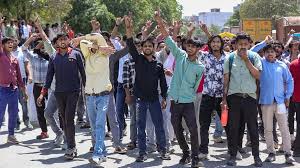

Noida, one of India’s fastest-growing industrial hubs, witnessed massive unrest recently as thousands of factory workers took to the streets demanding better wages and working conditions. What began as a labour protest quickly escalated into violence, drawing national attention and raising serious questions about economic inequality, labour rights, and law enforcement.
What Sparked the Noida Protest?
The protests were primarily driven by dissatisfaction among factory workers over low wages and poor working conditions. Thousands of workers claimed that their salaries were not enough to meet rising living costs, especially in urban areas like Noida and Greater Noida.
According to reports, over 40,000 workers participated in the protests across multiple industrial sectors, including Phase-2, Sector 63, and Sector 60. :contentReference[oaicite:0]{index=0}
The workers were demanding a significant wage hike, with many insisting that the minimum monthly salary should be increased to ₹18,000–₹20,000 to match inflation and rising expenses.
From Peaceful Protest to Violence
Initially, the demonstrations were largely peaceful. However, the situation quickly escalated into violence. Protesters reportedly clashed with police, threw stones, and set vehicles on fire in several areas.
Authorities had to deploy tear gas and additional police forces to control the situation. Major roads were blocked, causing severe traffic jams and disrupting daily life for commuters. :contentReference[oaicite:1]{index=1}
More than 300 people were arrested, and several others were detained in connection with incidents of arson and vandalism. :contentReference[oaicite:2]{index=2}
Was There a Larger Conspiracy?
One of the most controversial aspects of the incident is the claim by authorities that the protest may not have been entirely spontaneous.
Officials have suggested that “outsiders” may have infiltrated the protests and incited violence after the initial peaceful gatherings. Investigations are underway to examine possible links to organized misinformation campaigns and even alleged foreign involvement. :contentReference[oaicite:3]{index=3}
Digital platforms, including WhatsApp groups and social media channels, are also being investigated for their role in mobilizing and possibly escalating the protests. :contentReference[oaicite:4]{index=4}
Government Response: Wage Hike Announced
In response to the protests, the Uttar Pradesh government announced an increase in minimum wages across different worker categories.
Under the revised structure:
- Unskilled workers will earn around ₹13,690 per month
- Semi-skilled workers will earn about ₹15,059
- Skilled workers will receive approximately ₹16,868
This decision was seen as an attempt to calm tensions and address worker grievances. :contentReference[oaicite:5]{index=5}
However, many workers have rejected the hike, stating that it is still insufficient given the high cost of living and long working hours.
Protests Continue Despite Measures
Even after the wage hike announcement, protests have continued in several parts of Noida. Workers returned to the streets, demanding further increases and better enforcement of labour laws.
Clashes between protesters and police have been reported again, with incidents of stone-pelting and injuries to law enforcement personnel. :contentReference[oaicite:6]{index=6}
The unrest has also spread beyond Noida, with similar protests emerging in nearby regions like Faridabad.
Impact on Daily Life and Economy
The protests have had a significant impact on daily life in Noida. Traffic disruptions, factory shutdowns, and damage to public property have affected both residents and businesses.
Noida, being home to major manufacturing units and multinational companies, plays a crucial role in the regional economy. Prolonged unrest could disrupt production and impact supply chains.
Several industrial units reportedly halted operations temporarily due to safety concerns and workforce disruptions.
The Bigger Picture: Why This Matters
The Noida protest is not just a local issue—it reflects a broader challenge faced by workers across India. Rising inflation, stagnant wages, and demanding work conditions are pushing labourers to voice their concerns more aggressively.
Experts believe that unless structural changes are made in wage policies and labour protections, similar protests could emerge in other industrial regions.
The incident also highlights the role of digital platforms in mobilizing large crowds, which can be both a tool for awareness and a risk factor for misinformation.
Law, Order, and Human Concerns
While maintaining law and order is essential, the situation also raises questions about how protests are handled. The use of force, mass arrests, and allegations of conspiracy must be carefully investigated to ensure fairness and transparency.
At the same time, the concerns of workers—who form the backbone of industrial growth—must not be ignored.
What Happens Next?
Authorities have increased security across sensitive areas in Noida, and investigations are ongoing. Special task forces are examining the funding, coordination, and possible external links behind the protests.
Meanwhile, labour unions and worker groups are expected to continue negotiations with the government and employers.
The coming weeks will be crucial in determining whether the situation stabilizes or escalates further.
Conclusion
The Noida workers’ protest is a powerful reminder of the growing tension between economic development and worker welfare. While the city continues to grow as an industrial powerhouse, the voices of those driving this growth cannot be overlooked.
Balancing law enforcement with empathy, and economic progress with fair wages, will be key to preventing such unrest in the future.
Because at its core, this is not just a story of protest—it is a story of survival, dignity, and the fight for a better life.





Leave a Reply