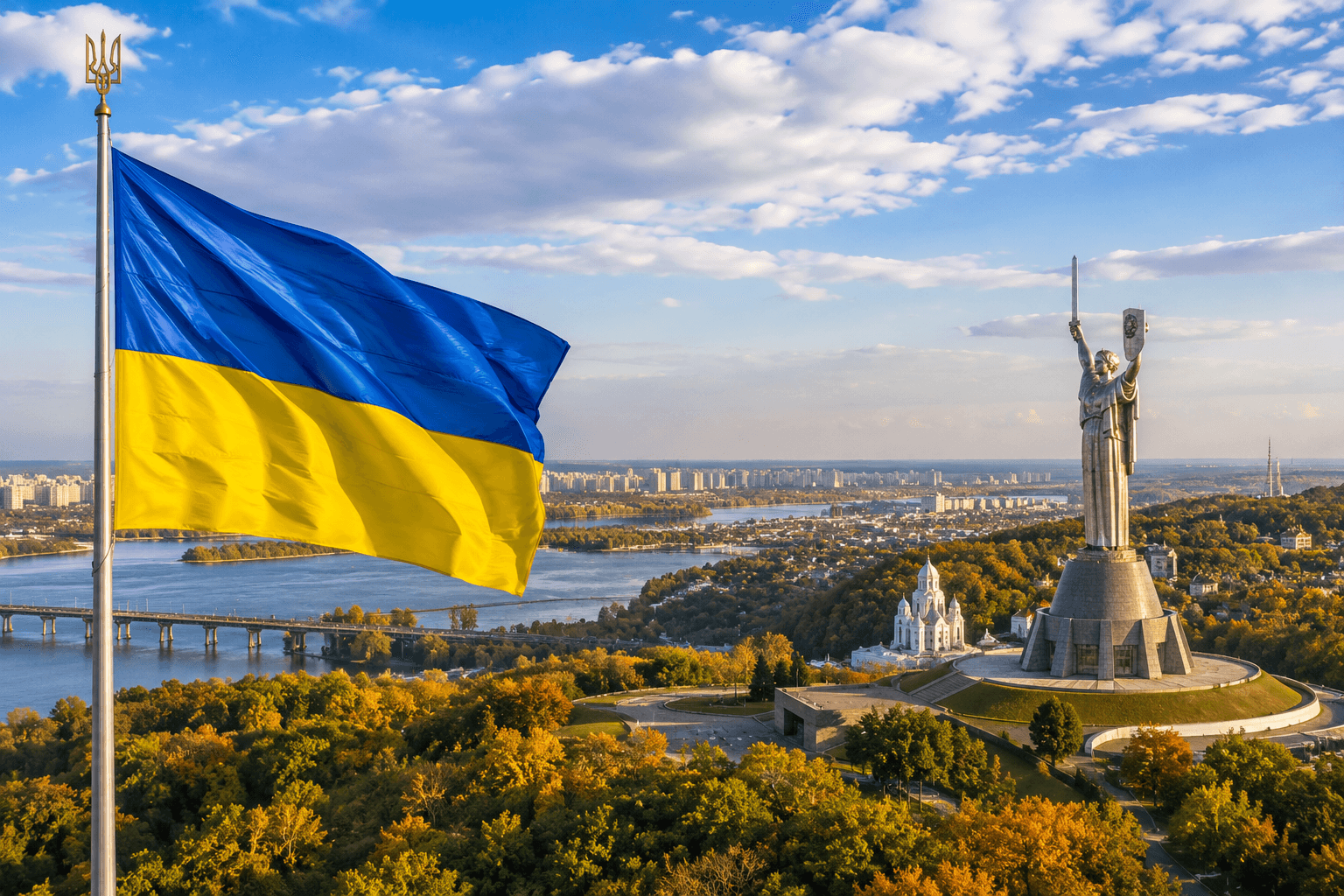

Ukraine is a large and historically significant country located in Eastern Europe. Known for its rich cultural heritage, agricultural strength, and strategic geopolitical position, Ukraine has become one of the most closely watched nations in the world, especially following the ongoing conflict that began in 2022.
The country has a long and complex history shaped by empires, wars, independence movements, and modern political transformations. In recent years, Ukraine has faced major challenges due to war, displacement, economic disruption, and reconstruction efforts.
This article explores Ukraine’s history, geography, culture, economy, and the impact of the ongoing conflict on its society and future.
Geography and Strategic Importance
Ukraine is located in Eastern Europe and shares borders with Russia, Belarus, Poland, Slovakia, Hungary, Romania, and Moldova. It also has access to the Black Sea and the Sea of Azov, giving it important maritime routes.
The country is known for its vast fertile plains called “chernozem,” which are among the most productive agricultural lands in the world.
This geography makes Ukraine a major global exporter of wheat, corn, and sunflower oil, earning it the nickname “the breadbasket of Europe.”
Ancient and Medieval History
Ukraine’s history dates back to ancient Slavic tribes and early medieval states. One of the most important early political entities was Kievan Rus, established in the 9th century.
Kievan Rus is considered a cultural and historical foundation for modern Ukraine, Russia, and Belarus. Kyiv, the capital of modern Ukraine, was one of its central cities.
Over the centuries, Ukraine came under the control of various powers, including the Polish-Lithuanian Commonwealth, the Russian Empire, and later the Soviet Union.
Independence in 1991
Ukraine declared independence in 1991 following the collapse of the Soviet Union. This marked a major turning point in the country’s history, as it transitioned into a sovereign democratic state.
The early years of independence were marked by economic restructuring, political reforms, and efforts to establish national identity.
Ukraine adopted a democratic system with elected presidents and a parliamentary government.
Political System and Governance
Ukraine operates as a semi-presidential republic. The president serves as the head of state, while the prime minister manages government operations.
The political system includes a multi-party structure, although it has often faced challenges related to corruption, reforms, and political instability.
Despite difficulties, Ukraine has continued to strengthen its democratic institutions and align more closely with European governance standards.
Culture and National Identity
Ukrainian culture is deeply rooted in Slavic traditions, folklore, music, and religious heritage.
The Ukrainian language is a key element of national identity, along with traditional clothing, dances, and festivals.
Folk music and embroidery (vyshyvanka) are important cultural symbols that reflect Ukraine’s historical identity.
The country also has a strong literary and artistic tradition, with writers, poets, and artists contributing to European culture.
Economy of Ukraine
Ukraine has a mixed economy with strong agricultural, industrial, and technology sectors.
Before the war, Ukraine was one of the world’s largest exporters of grain and sunflower oil.
The country also has significant steel production, machinery manufacturing, and growing IT outsourcing industries.
However, the ongoing conflict has severely disrupted economic activity, infrastructure, and international trade.
Impact of the War
The war that began in 2022 has had a profound impact on Ukraine’s society, economy, and global relations.
Millions of people have been displaced internally and internationally due to the conflict.
Cities, infrastructure, and industrial areas have suffered significant damage, requiring large-scale reconstruction efforts.
The war has also affected global energy markets and food supply chains due to Ukraine’s role in agriculture and exports.
Humanitarian Crisis
The conflict has created one of the largest humanitarian crises in Europe in recent history.
International organizations have reported millions of refugees seeking safety in neighboring countries.
Humanitarian aid has been provided by governments, NGOs, and global institutions to support displaced populations.
Efforts continue to provide food, shelter, medical care, and education for affected communities.
International Support and Alliances
Ukraine has received significant international support from various countries and organizations.
This support includes financial aid, military assistance, humanitarian relief, and diplomatic backing.
Many Western countries have expressed strong support for Ukraine’s sovereignty and territorial integrity.
International alliances and partnerships continue to play a key role in Ukraine’s defense and recovery efforts.
Reconstruction and Recovery Efforts
As parts of the country stabilize, Ukraine is focusing on long-term reconstruction and recovery.
This includes rebuilding infrastructure, restoring energy systems, and revitalizing the economy.
International investment and cooperation are expected to play a major role in rebuilding cities and industries.
The reconstruction process is seen as a long-term effort that will require sustained global support.
Technology and Innovation
Despite challenges, Ukraine has developed a strong technology sector, particularly in software development and IT services.
Ukrainian tech professionals are highly regarded in global markets, contributing to outsourcing, cybersecurity, and software engineering projects.
The IT sector continues to operate and adapt even during difficult conditions, demonstrating resilience and innovation.
Education and Society
Ukraine has a well-developed education system with universities, technical institutes, and research centers.
Education remains a priority, even during conflict, with efforts to continue schooling through online platforms and alternative arrangements.
Ukrainian society is known for its resilience, strong community bonds, and cultural pride.
Global Role of Ukraine
Ukraine plays an important role in global geopolitics due to its location between Europe and Russia.
The country is also a key supplier of agricultural products, making it essential to global food security.
Its political developments have significant implications for international relations, security policy, and economic stability worldwide.
Future Outlook
The future of Ukraine depends on the resolution of the ongoing conflict, reconstruction efforts, and continued international support.
Key priorities include restoring peace, rebuilding infrastructure, strengthening democracy, and improving economic stability.
Despite challenges, Ukraine continues to demonstrate resilience and determination in shaping its future.
Conclusion
Ukraine is a nation with a deep historical legacy, rich culture, and significant geopolitical importance. While it currently faces severe challenges due to war and instability, its people and institutions continue to work toward recovery and rebuilding.
The country’s future will be shaped by its ability to restore peace, strengthen its economy, and maintain international partnerships.
Ukraine remains a symbol of resilience and national identity in the face of adversity.





Leave a Reply