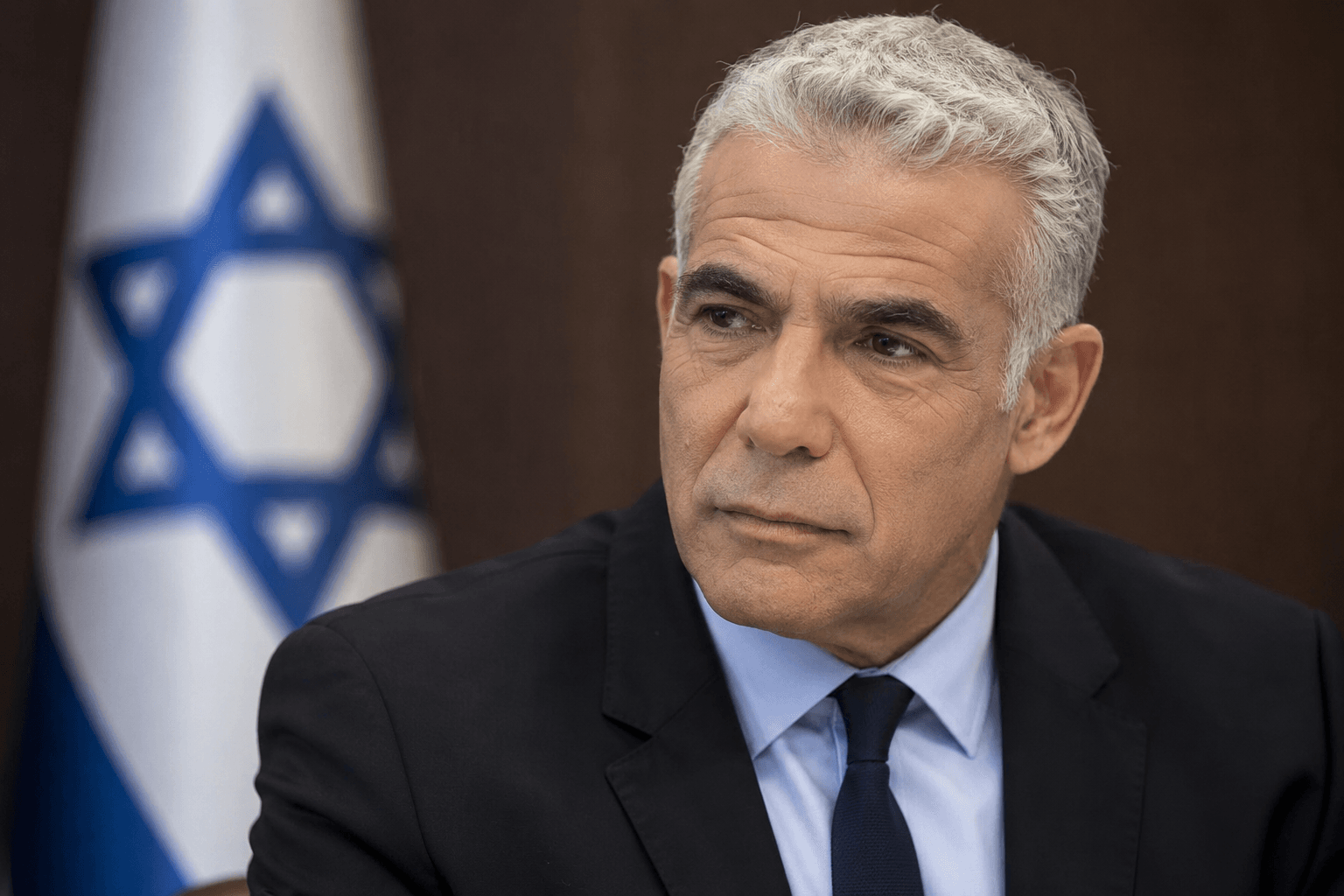

In modern Israeli politics, few figures have experienced a transformation as remarkable as Yair Lapid. From television studios and newspaper columns to the highest office in Israel, Lapid’s journey reflects the changing political and social landscape of the country. Known for his centrist ideology, strong communication skills, and focus on the middle class, Lapid has become one of the most influential political leaders in Israel during the 21st century.
As a politician, journalist, author, and former Prime Minister, Yair Lapid represents a new generation of Israeli leadership that attempts to bridge divides in a deeply polarized society. His political career has been marked by calls for government reform, economic fairness, and a balanced approach to both domestic and international issues.
Early Life and Background
Yair Lapid was born on November 5, 1963, in Tel Aviv, Israel. He comes from a family deeply involved in public life. His father, Yosef “Tommy” Lapid, was a well-known journalist and politician who later served as Deputy Prime Minister and Minister of Justice. His mother, Shulamit Lapid, is an acclaimed novelist and playwright.
Growing up in a household centered on politics, literature, and media had a profound impact on Yair Lapid. Before entering politics, he worked in a variety of fields including journalism, television hosting, screenwriting, and acting. His charisma and communication skills made him one of Israel’s most recognized media personalities.
Lapid hosted popular television talk shows, wrote columns for major newspapers, and published several books. His writing often focused on Israeli society, middle-class struggles, and national identity. These experiences gave him direct insight into the concerns of ordinary citizens, something that later became a central theme in his political platform.
Entry into Politics
In 2012, Yair Lapid officially entered politics by founding the centrist political party Yesh Atid, which translates to “There Is a Future.” The party was created with the aim of representing Israel’s middle class and promoting reforms in education, housing, and government accountability.
The launch of Yesh Atid quickly attracted widespread attention. Many Israelis were frustrated with rising living costs, economic inequality, and political corruption. Lapid positioned himself as a modern and pragmatic leader who could bring change without relying on extreme political ideologies.
In the 2013 Israeli parliamentary elections, Yesh Atid achieved a surprising success by winning 19 seats in the Knesset, making it the second-largest party in Israel at the time. This dramatic rise demonstrated Lapid’s popularity and the growing demand for centrist politics.
Role as Finance Minister
Following the 2013 elections, Lapid joined Prime Minister Benjamin Netanyahu’s coalition government and became Israel’s Finance Minister. His tenure focused heavily on economic reform and reducing the financial burden on middle-class families.
One of his key initiatives involved efforts to lower housing prices and improve access to affordable housing. He also promoted educational reforms and sought to increase workforce participation among different sectors of Israeli society.
However, his time as Finance Minister was not without criticism. Opponents argued that some of his economic policies lacked long-term effectiveness and that he struggled to manage the complexities of Israel’s economy. Despite these criticisms, Lapid remained one of the country’s most visible political figures.
Political Challenges and Growth
After leaving the government in 2014, Lapid spent several years strengthening his political influence and rebuilding support for Yesh Atid. During this period, Israeli politics became increasingly divided, with repeated elections and unstable coalition governments.
Lapid positioned himself as one of the leading opponents of Benjamin Netanyahu, emphasizing the need for political unity, democratic institutions, and clean governance. He focused on appealing to moderate voters from both the left and right sides of the political spectrum.
One of Lapid’s greatest strengths has been his ability to communicate effectively with the public. His background in media helped him connect with voters through clear messaging and direct engagement. He often presented himself as a practical leader focused on solutions rather than ideological battles.
Becoming Prime Minister
In 2021, Israeli politics entered a historic phase when a broad coalition of parties united to remove Benjamin Netanyahu from power after more than a decade as Prime Minister. Yair Lapid played a crucial role in forming this coalition.
Lapid agreed to a power-sharing arrangement with Naftali Bennett, under which Bennett would initially serve as Prime Minister before Lapid later assumed the role. This coalition included parties from across the political spectrum, including left-wing, centrist, right-wing, and Arab parties.
The coalition government faced enormous challenges due to ideological differences among its members. Nevertheless, it represented an important moment in Israeli political history because it demonstrated the possibility of cooperation between diverse groups.
In July 2022, Yair Lapid officially became Prime Minister of Israel. Although his tenure was relatively short, it marked the culmination of years of political effort and positioned him as a major international statesman.
Foreign Policy and International Relations
As Prime Minister and Foreign Minister, Lapid emphasized strengthening Israel’s international relationships. He supported closer ties with the United States, European countries, and regional partners in the Middle East.
Lapid also supported the Abraham Accords, the diplomatic agreements that normalized relations between Israel and several Arab nations. He viewed regional cooperation as essential for economic development and long-term security.
On the issue of the Israeli-Palestinian conflict, Lapid has generally supported a two-state solution while emphasizing Israel’s security concerns. His approach is often considered more moderate compared to some right-wing Israeli leaders.
Internationally, Lapid was often praised for his diplomatic style and communication abilities. He worked to improve Israel’s image abroad and strengthen democratic alliances.
Leadership Style and Political Philosophy
Yair Lapid’s leadership style is characterized by pragmatism, moderation, and strong public communication. Unlike some traditional politicians who rely heavily on ideological rhetoric, Lapid often focuses on practical governance and compromise.
His political philosophy centers around several key principles:
- Strengthening the middle class
- Improving education and public services
- Protecting democratic institutions
- Encouraging national unity
- Promoting economic opportunity
Lapid has also emphasized the importance of secular values in Israeli society. He advocates for reducing religious influence in certain areas of public policy while maintaining respect for Jewish traditions and identity.
Supporters see him as a modern reformer capable of uniting different communities within Israel. Critics, however, argue that his centrist approach can sometimes appear vague or lacking in decisive ideological direction.
Public Image and Media Influence
One of the most unique aspects of Yair Lapid’s career is his relationship with the media. Before politics, he was already one of Israel’s most recognizable television personalities. This background gave him a major advantage in public communication.
Lapid understands the importance of storytelling, branding, and direct messaging in modern politics. His speeches are often carefully crafted to appeal to broad audiences, and he maintains a strong presence on social media platforms.
At the same time, his celebrity background has sometimes led critics to question whether he relies too heavily on image and popularity. Nevertheless, his continued political success suggests that many voters appreciate his communication style and accessibility.
The Future of Yair Lapid
Yair Lapid remains one of the central figures in Israeli politics. As leader of Yesh Atid, he continues to influence debates on democracy, security, economic policy, and social reform.
Israel’s political landscape remains highly competitive and unpredictable, meaning Lapid’s future role could continue to evolve. Whether serving in government or opposition, he is likely to remain a significant voice in shaping the country’s direction.
His journey from journalist to Prime Minister demonstrates the changing nature of political leadership in the modern era. It also reflects the growing importance of communication, public trust, and adaptability in democratic politics.
Conclusion
Yair Lapid’s rise in Israeli politics is a story of transformation, ambition, and resilience. From his early career in journalism and television to becoming Prime Minister of Israel, Lapid has built a reputation as a centrist reformer focused on unity and modernization.
Although opinions about his policies differ, there is little doubt that he has played a major role in reshaping Israeli politics over the past decade. His emphasis on democratic values, middle-class concerns, and political cooperation continues to resonate with many Israelis seeking stability and progress.
As Israel faces complex domestic and international challenges, Yair Lapid’s influence is likely to remain important for years to come. Whether admired or criticized, he represents a modern political figure whose career reflects both the opportunities and challenges of leadership in the 21st century.





Leave a Reply