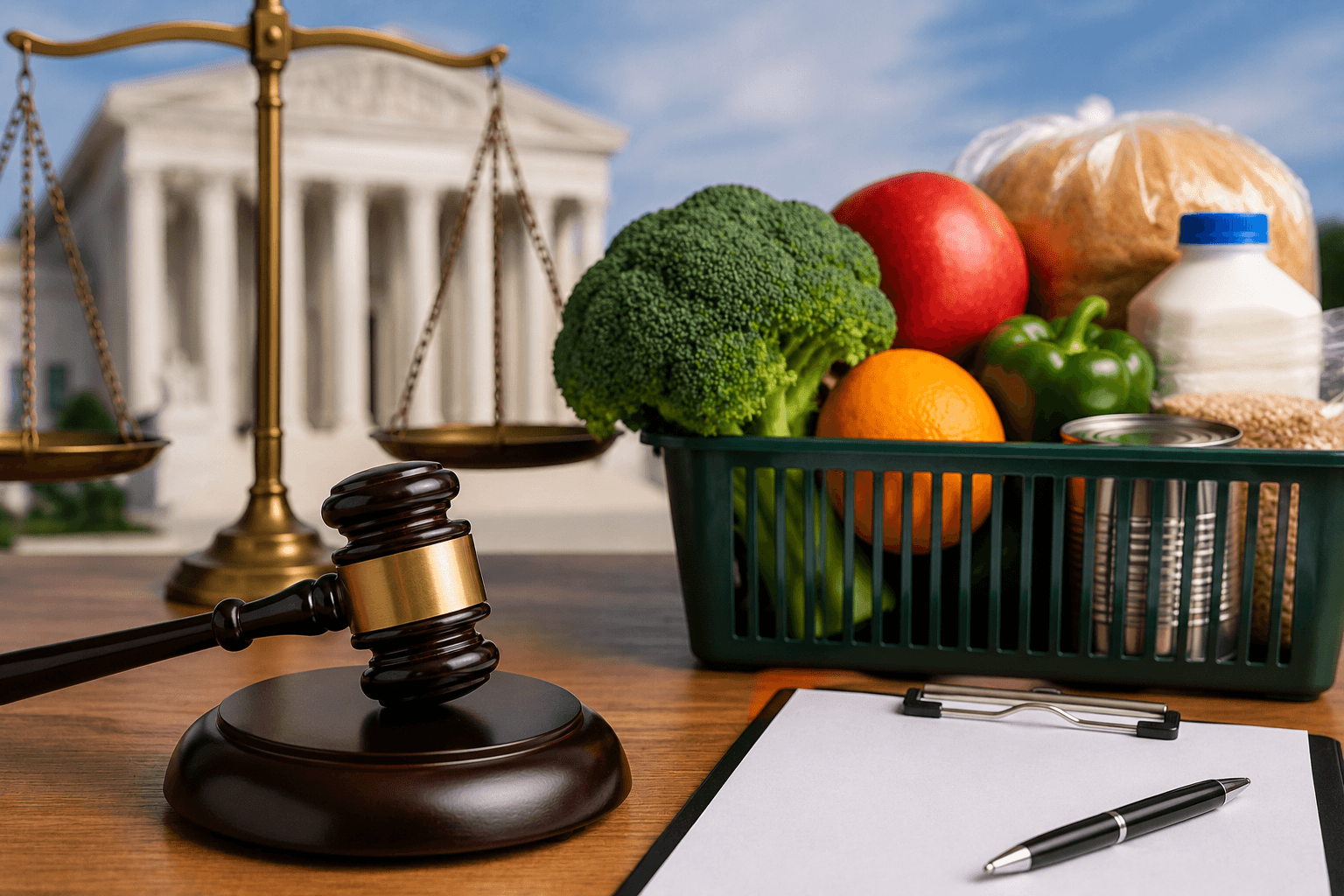

The United States Department of Agriculture (USDA) plays a central role in funding and administering nutrition assistance programs that support millions of Americans. These programs include school meal initiatives, food security programs, and supplemental nutrition assistance designed to reduce hunger and improve public health outcomes.
Recently, legal discussions surrounding a “nutrition funding injunction” involving USDA-related programs have drawn attention from policymakers, advocacy groups, and legal analysts. An injunction in this context refers to a court order that temporarily halts or restricts government actions, including funding distribution, while legal disputes are resolved.
This article explores the meaning of a USDA nutrition funding injunction, the legal framework behind it, its implications for nutrition programs, and the broader impact on public health and policy.
Understanding USDA Nutrition Programs
The USDA oversees several key nutrition assistance programs in the United States. These programs are designed to address food insecurity and improve access to nutritious meals for vulnerable populations.
Some of the most significant programs include:
- National School Lunch Program (NSLP)
- School Breakfast Program (SBP)
- Supplemental Nutrition Assistance Program (SNAP)
- Women, Infants, and Children (WIC) program
These programs are funded through federal appropriations and distributed through state agencies, schools, and local organizations.
Any disruption in funding can have immediate consequences for millions of individuals who rely on these services daily.
What Is a Nutrition Funding Injunction?
An injunction is a legal order issued by a court that requires a party to do or refrain from doing specific actions. In the context of USDA nutrition funding, an injunction could temporarily stop the distribution of funds or require the government to modify how funds are allocated.
Such legal actions typically arise when there are disputes over:
- Federal authority or rulemaking
- Compliance with administrative law procedures
- Allegations of improper funding allocation
- Constitutional or statutory challenges
Courts may issue preliminary injunctions while reviewing the merits of a case to prevent potential harm or legal violations during litigation.
Why Nutrition Funding Becomes a Legal Issue
Nutrition funding disputes often arise from disagreements over policy implementation, eligibility requirements, or administrative rule changes.
For example, changes to SNAP eligibility criteria or school meal funding formulas may be challenged by advocacy organizations or state governments.
When plaintiffs believe that federal agencies have exceeded their authority or failed to follow proper procedures under administrative law, they may seek judicial intervention.
This can result in injunctions that temporarily halt implementation of new rules or funding distributions.
Role of the Courts in Federal Funding Disputes
Federal courts play an important role in reviewing disputes involving government agencies like the USDA. Judges assess whether agency actions comply with federal law, including the Administrative Procedure Act (APA).
In injunction cases, courts typically evaluate:
- Likelihood of success on the merits
- Potential for irreparable harm
- Balance of equities between parties
- Public interest considerations
If these factors favor the plaintiff, a court may issue a temporary injunction while the case proceeds.
Impact on School Meal Programs
One of the most sensitive areas affected by USDA nutrition funding disputes is school meal programs. Millions of children depend on free or reduced-price meals provided through federal funding.
If funding is delayed or restricted due to an injunction, schools may face operational challenges such as:
- Budget shortfalls for meal provision
- Disruptions in food supply contracts
- Administrative delays in reimbursements
Even temporary disruptions can affect students’ access to consistent nutrition, which is critical for learning and development.
Impact on SNAP and Food Security
The Supplemental Nutrition Assistance Program (SNAP) is one of the largest federal nutrition assistance programs in the United States. It provides monthly benefits to low-income individuals and families to purchase food.
A funding injunction affecting SNAP could delay benefit distribution or modify eligibility systems, potentially impacting millions of households.
Food banks and community organizations often experience increased demand when federal assistance is disrupted, placing additional pressure on local resources.
Policy Debates Behind Funding Injunctions
Legal disputes over USDA funding are often tied to broader policy debates about the role of government in social welfare programs.
Supporters of expanded nutrition funding argue that these programs are essential for reducing poverty, improving public health, and supporting economic stability.
Critics may argue for stricter eligibility rules, reduced federal spending, or greater state-level control over nutrition assistance programs.
These disagreements often lead to legal challenges when policy changes are implemented.
Administrative Law and USDA Authority
The USDA must operate within the boundaries of federal administrative law. This includes following procedures for rulemaking, public comment periods, and impact assessments.
If stakeholders believe the agency has failed to follow these procedures, they may challenge its actions in court.
Injunctions serve as a legal tool to pause implementation until courts determine whether the agency acted lawfully.
Economic Implications of Funding Disruptions
Nutrition assistance programs also play a role in the broader economy. SNAP benefits, for example, are often spent quickly in local grocery stores, supporting retail and agricultural sectors.
A disruption in funding could temporarily reduce consumer spending in certain communities, particularly in rural and low-income areas.
Farmers and food suppliers who depend on federal nutrition programs may also experience indirect impacts.
Public Health Considerations
Nutrition funding is closely linked to public health outcomes. Access to consistent, healthy food reduces risks of chronic diseases, supports child development, and improves overall well-being.
Interruptions in funding can increase food insecurity, which has been associated with higher rates of stress, illness, and developmental challenges in children.
Public health experts often emphasize the importance of stable funding for maintaining long-term health outcomes.
State and Local Government Roles
While the federal government provides funding, state and local agencies administer many USDA nutrition programs.
During legal disputes or injunctions, state agencies must adapt quickly to changes in funding availability or administrative rules.
This can create coordination challenges between federal and state governments.
Political Reactions
Nutrition funding injunctions often generate political debate. Lawmakers may disagree on whether court intervention is appropriate or whether it interferes with executive authority.
Some political actors view injunctions as necessary checks on government power, while others see them as obstacles to policy implementation.
These debates reflect broader tensions in U.S. governance between the judiciary and executive branches.
Historical Context
Legal challenges involving federal nutrition programs are not new. Over time, courts have reviewed various disputes related to eligibility rules, funding formulas, and administrative procedures.
In many cases, courts have upheld USDA authority while requiring procedural corrections or policy adjustments.
This demonstrates the ongoing role of judicial oversight in federal program administration.
Potential Outcomes of an Injunction Case
The outcome of a USDA nutrition funding injunction case may vary depending on judicial findings. Possible outcomes include:
- Lifting the injunction and allowing funding to proceed
- Modifying the challenged policy or rule
- Requiring additional administrative review
- Long-term legal reform of program administration
Each outcome has different implications for program beneficiaries and government agencies.
Future Outlook
As nutrition assistance programs continue to evolve, legal oversight is expected to remain an important part of policy implementation.
Future disputes may focus on digital benefit systems, eligibility verification technologies, and expanded nutrition initiatives.
Ensuring legal compliance while maintaining efficient service delivery will remain a key challenge for the USDA and related agencies.
Conclusion
A USDA nutrition funding injunction represents a complex intersection of law, policy, and public welfare. While legal disputes can temporarily disrupt funding processes, they also serve as a mechanism for ensuring accountability and compliance with federal law.
Ultimately, the goal of USDA nutrition programs is to reduce food insecurity and support public health. Court involvement helps define the boundaries of agency authority while shaping the future of nutrition policy in the United States.



Leave a Reply